Oshkosh’s CES 2026 showcase reveals how autonomy, AI, and electrification are no longer experimental add-ons, but practical tools reshaping how essential work gets done in construction, cities, and airports.
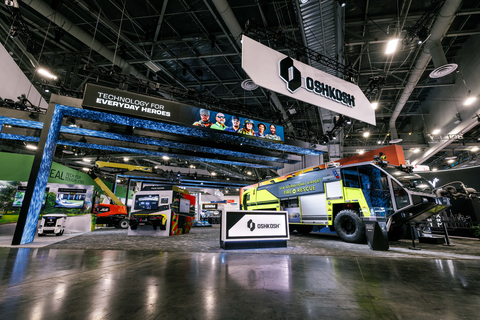
Oshkosh Corporation arrived at CES 2026 with a message that felt less futuristic than pragmatic: advanced technologies are now being designed for people who work in unpredictable, high-risk environments every day. Rather than focusing on consumer mobility, the company emphasized firefighters, construction crews, sanitation workers, and airport teams—groups whose safety and efficiency depend on equipment that performs reliably under pressure. This framing matters because it signals a shift in how innovation is being prioritized across industrial sectors.
On construction sites, Oshkosh highlighted how autonomy and connectivity are beginning to replace fragmented, manual workflows. Autonomous boom lifts and coordinated scissor lifts aim to reduce the need for workers to operate at height while improving precision in repetitive tasks. The implication is not a fully automated job site, but one where machines absorb the most hazardous and physically demanding work.
In neighborhoods and municipal services, the company’s use of AI reflects a growing focus on prevention rather than reaction. Systems that detect recycling contamination or anticipate roadside collisions attempt to intervene before small errors turn into safety incidents or environmental setbacks. These technologies suggest a broader trend toward embedding intelligence directly into public infrastructure, where outcomes depend as much on behavior as on equipment.
Airports offer a different lens on the same convergence of autonomy, electrification, and data. Electrified emergency vehicles and modular autonomous robots are designed to operate continuously in complex, time-sensitive environments. Here, efficiency is inseparable from reliability, as even minor delays can ripple across tightly coordinated systems that serve millions of travelers.
Taken together, Oshkosh’s CES presence illustrates how advanced technology is being translated into operational reality. The significance lies not in any single robot or electric vehicle, but in the integration of AI, autonomy, and connectivity across diverse settings. As these tools move from demonstrations to deployment, they reveal how innovation is increasingly measured by its ability to quietly improve safety, resilience, and productivity for those doing the hardest work.