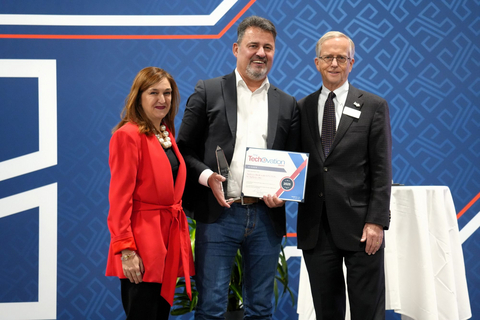
John Carey’s recognition by CRN highlights how partner ecosystems, not just products, are shaping growth strategies as enterprise technology companies adapt to faster, more distributed innovation cycles.
When SAS announced that John Carey had again been named a CRN Channel Chief for 2026, the news landed less as a personal accolade and more as a marker of how enterprise technology companies are evolving. SAS appears in the spotlight not because of a single product release, but because of how it organizes relationships across a global partner network that now spans more than 90 countries. In an industry where scale increasingly depends on collaboration, leadership in the channel has become strategically visible.
The CRN Channel Chiefs list focuses on executives who influence how technology reaches customers, and Carey’s recognition reflects the growing importance of intermediaries in complex software markets. Enterprise analytics and AI platforms are rarely deployed in isolation, and partners often determine whether tools are adopted quickly or stall in implementation. This places channel strategy closer to the core of business performance than it was a decade ago.
For SAS, whose offerings are used across industries with different regulatory, data, and infrastructure realities, the channel serves as both translator and accelerator. Partners help adapt cloud-based platforms like SAS Viya to local needs while reducing friction between vendor innovation and customer execution. Recognition from CRN suggests that these behind-the-scenes structures are now viewed as competitive assets rather than operational necessities.
The repeat nature of Carey’s recognition also hints at continuity in an industry often defined by disruption. While headlines tend to focus on emerging models or rapid pivots, many enterprise customers value predictability in how vendors support partners over time. Stable channel leadership can signal to integrators and resellers that long-term investment in a platform is likely to be rewarded with sustained support.
More broadly, the announcement reflects a shift in how growth is measured in enterprise technology. Success is no longer only about feature velocity or market share, but about how effectively ecosystems function under pressure from rapid AI adoption and rising customer expectations. In that context, channel leadership recognition becomes less about prestige and more about signaling readiness for a more interconnected future, where collaboration is as critical as code.