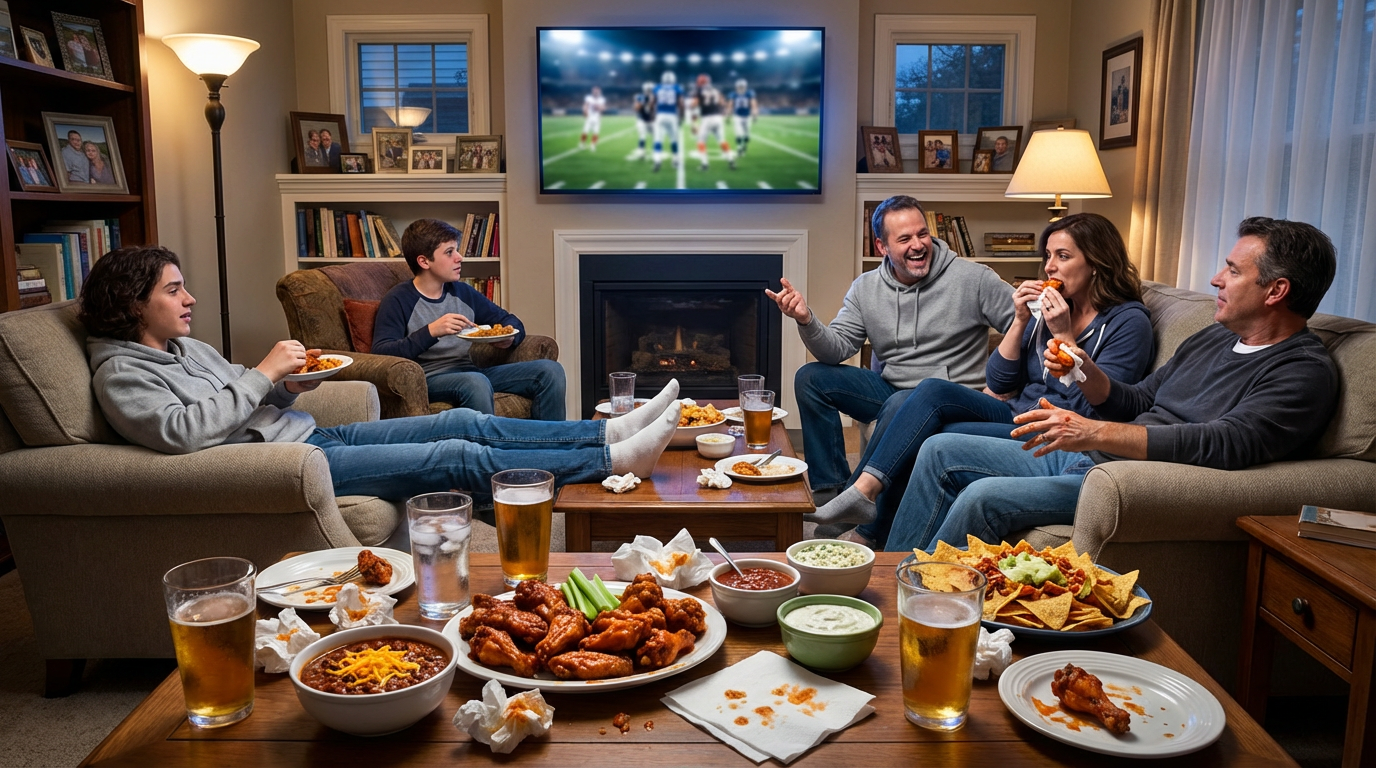
As the NFL playoffs build toward Super Bowl LX, Bounty’s latest “wingman” campaign shows how everyday household brands now rely on cultural rituals, celebrity familiarity, and experiential marketing to stay relevant.
Bounty returns to the spotlight this football season by positioning itself as an essential part of gameday rituals, framing spills and sticky fingers as an unavoidable companion to America’s appetite for wings and football. The campaign underscores how even utilitarian brands compete for attention during the most saturated advertising window of the year by embedding themselves in familiar, social moments rather than product features alone.
The choice to center the campaign on chicken wings is not accidental. Super Bowl food traditions are among the few shared cultural constants in a fragmented media landscape, and wings—messy, communal, and indulgent—offer a natural metaphor for the brand’s core promise without requiring technical explanation. By leaning into that inevitability, Bounty aligns itself with behavior fans already expect rather than asking them to adopt something new.
The campaign’s use of recognizable sports media personalities and current and former NFL players reflects a broader shift in advertising toward credibility through familiarity. Instead of novelty, the emphasis is on repetition and recognition, reinforcing the idea that trust is built over seasons rather than moments, much like fandom itself. This approach mirrors how brands increasingly function as long-term participants in cultural cycles rather than one-off sponsors.
Bounty’s physical presence at Super Bowl LX’s media center illustrates how experiential marketing has become as important as traditional ads. Creating an immersive, interactive environment for reporters and influencers allows the brand to extend its message beyond television screens into social and digital ecosystems, where behind-the-scenes content often carries as much weight as commercials.
The campaign also highlights how mass-market brands balance spectacle with practicality. While celebrity appearances and large-scale activations generate buzz, the core message remains anchored in a simple household function, reminding consumers why the product exists in the first place. In an era when attention is scarce and authenticity scrutinized, Bounty’s strategy shows how grounding marketing in everyday realities can make even the messiest moments feel deliberately, and effectively, branded.