A new 40-ounce device from Echo Water reflects how hydration, recovery science, and consumer electronics are converging, turning a once-simple habit into a data-driven wellness practice.
Echo Water’s introduction of the Echo Forty arrives at a moment when hydration has become both a cultural obsession and a technical challenge. The company’s latest hydrogen-infusing tumbler reframes water consumption as something to be optimized and tracked, not merely encouraged, suggesting how deeply wellness technology is embedding itself into everyday routines. Rather than focusing on elite athletes or clinical settings, the product is positioned squarely for daily life, from offices to gyms to long commutes.
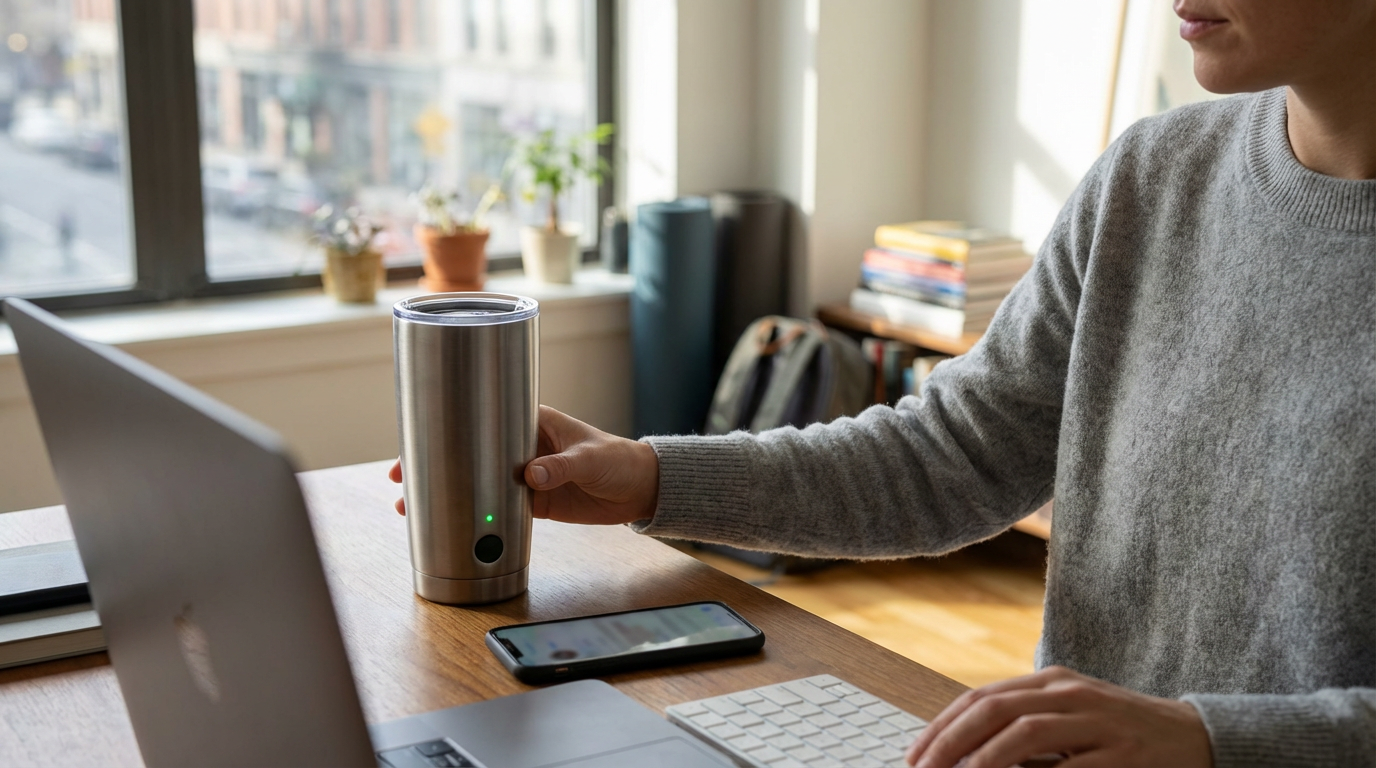
The significance of the Echo Forty lies less in its size than in its ambition to merge utility with measurement. By combining a large-capacity metal bottle with sensors, wireless connectivity, and app integration, the device reflects a broader shift toward “always-on” health tools that operate quietly in the background. Hydration, long treated as a vague lifestyle recommendation, is increasingly framed as a measurable behavior tied to recovery, energy, and consistency.
Hydrogen water itself remains a niche but growing category, supported by a body of peer-reviewed research exploring its relationship to oxidative stress and inflammation. Echo Water’s strategy assumes that consumers are not only open to this science but willing to adopt technology to make adherence easier. In that sense, the Echo Forty functions less as a novelty and more as an attempt to lower the friction between emerging research and real-world habits.
The timing of the launch at CES 2026 is also telling. Consumer electronics shows have expanded far beyond phones and televisions, increasingly serving as platforms for wellness devices that blur the line between lifestyle accessory and health instrument. A smart tumbler with UV self-cleaning and posture-sensing features fits neatly into that ecosystem, where convenience, hygiene, and personalization are becoming baseline expectations rather than differentiators.
More broadly, the Echo Forty highlights how wellness brands are responding to fatigue around short-term fixes and fragmented tools. Instead of another supplement or app, the product embeds its proposition into something people already use multiple times a day. Whether hydrogen-infused water becomes mainstream remains uncertain, but the approach points to a future in which health technologies succeed not by demanding attention, but by integrating seamlessly into ordinary behaviors that people are unlikely to abandon.