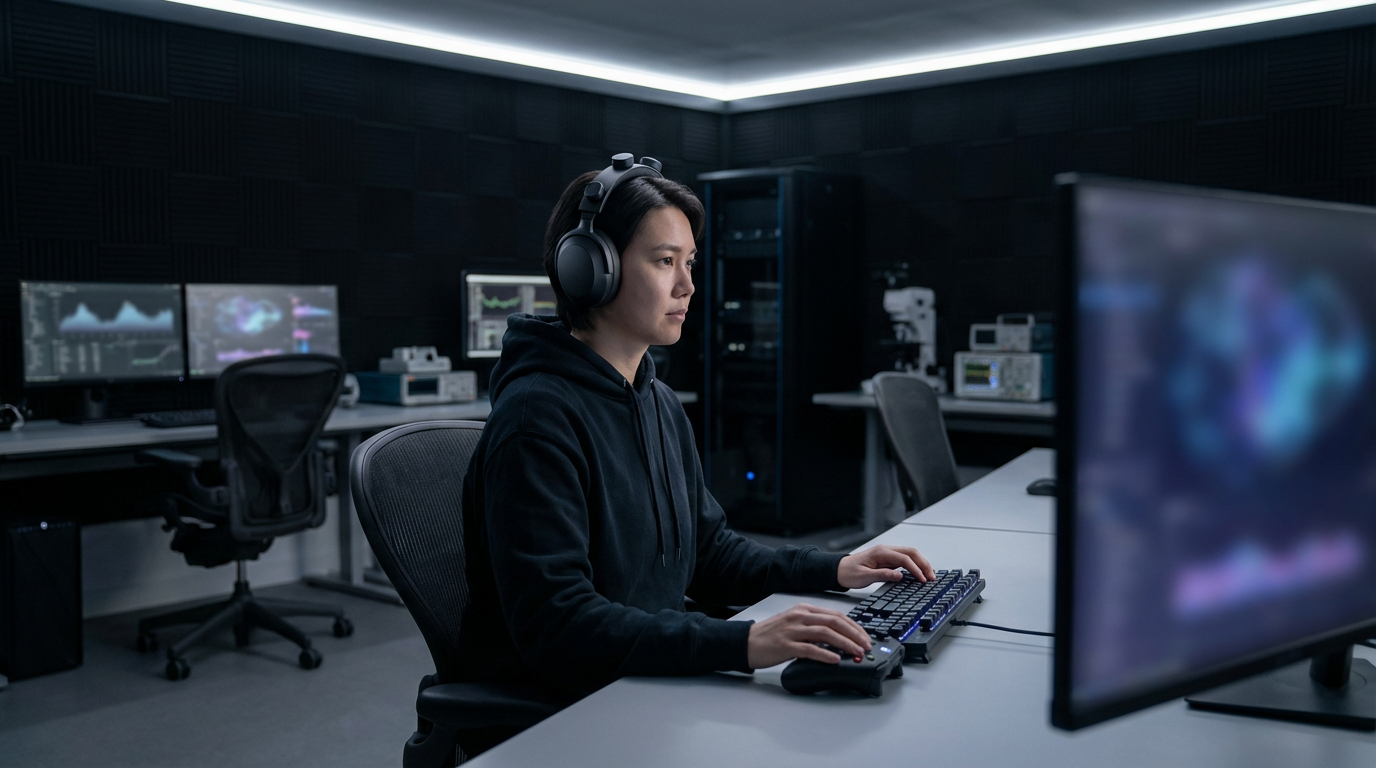
Neurable’s CES debut with HyperX hints at a future where cognitive focus becomes a measurable input in gaming, raising questions about how far performance monitoring may extend in competitive and casual play.
Neurable used CES to introduce a neurotechnology-powered gaming headset developed with HyperX, marking a step toward bringing brain-sensing tools into mainstream consumer devices. The collaboration suggests that performance tracking in gaming is expanding beyond reaction time and mechanics to include cognitive states such as focus and mental fatigue. For an industry already saturated with peripherals, the move signals a search for new dimensions of competitive advantage.
The headset integrates non-invasive sensors that interpret brain activity in real time, translating neural signals into feedback designed to help players adjust how they play. Rather than controlling games with thought, the system focuses on awareness—surfacing patterns linked to attention and responsiveness. This distinction matters, as it positions neurotechnology as an analytical layer rather than a replacement for traditional inputs.
Gaming provides a particularly fertile testing ground for such tools because performance outcomes are measurable and immediate. Neurable cites early studies involving semi-professional and collegiate esports players showing modest but consistent gains in reaction time and accuracy during training tasks. While preliminary, these results reflect a broader trend in which data-driven optimization, long common in physical sports, is increasingly applied to cognitive performance.
The announcement also reflects shifting economics in gaming hardware. As the global gaming market continues to grow, wearables represent a fast-expanding segment where differentiation is difficult. Neurotechnology offers a way to move beyond incremental improvements in audio or comfort by promising insight into the player rather than just the game, though adoption will depend on reliability, comfort, and trust in how sensitive data is handled.
More broadly, Neurable’s CES presence highlights how brain-computer interface research is edging closer to everyday use. Once confined to laboratories and clinical settings, brain-sensing technologies are now being miniaturized and embedded into familiar products. Whether gamers embrace cognitive monitoring as readily as they adopted heart-rate tracking in fitness remains uncertain, but the collaboration underscores a larger shift: understanding performance is no longer limited to what the body does, but increasingly to how the mind responds in real time.