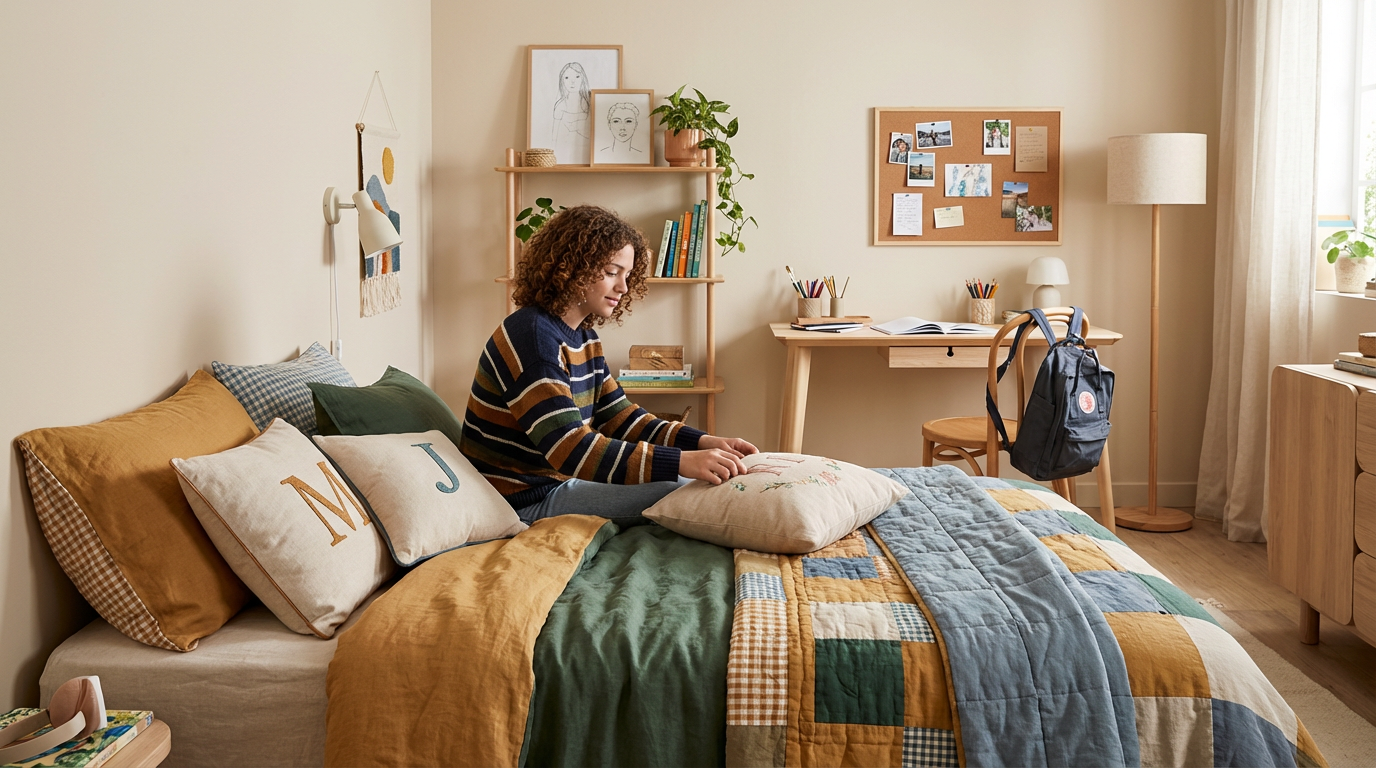
The first home furnishings collaboration from a personalization-first accessories brand points to how self-expression, not just durability, is reshaping how families think about children’s and teen interiors.
Pottery Barn Kids and Pottery Barn Teen are extending their reach beyond traditional children’s décor with a new collaboration that brings Stoney Clover Lane’s playful, customizable aesthetic into the home. The partnership signals a shift in how major home retailers are responding to a generation of families that increasingly view kids’ and teens’ spaces as personal statements rather than purely functional rooms. By translating an accessories brand known for patches and bright color into furniture and bedding, the companies are testing how far personalization can travel across categories.
The collaboration matters because it reflects changing expectations around childhood design. Parents and teens alike are gravitating toward interiors that feel expressive and adaptable, mirroring trends long established in fashion and accessories. This collection treats bedrooms and nurseries less as static spaces and more as evolving environments that can grow alongside a child’s identity, interests, and sense of ownership.
For Stoney Clover Lane, the move represents a notable expansion from travel bags and small-scale personalization into the more permanent world of home furnishings. Entering categories like bedding, seating, and lighting introduces new questions of longevity, safety, and versatility that accessories brands do not typically face. That transition underscores how lifestyle brands are seeking deeper integration into daily life, not just moments of travel or leisure.
From Pottery Barn Kids and Pottery Barn Teen’s perspective, the collaboration reinforces a strategy of cultural relevance through partnership rather than reinvention. Aligning with a brand already associated with individuality allows the retailer to refresh its assortment without abandoning its emphasis on quality and durability. It also acknowledges that today’s teens, in particular, want environments that reflect who they are now, not who a brand imagines them to be.
More broadly, the collection illustrates how the home furnishings industry is borrowing cues from youth culture, where customization and visual identity carry social weight. As kids and teens spend more time curating digital and physical spaces alike, their rooms become extensions of that self-curation. This collaboration suggests that the future of children’s home design may lie not in neutral palettes and long-term sameness, but in products that invite change, play, and personal storytelling over time.