How real-time inventory intelligence is helping restaurants move from guesswork to precision
Running a restaurant has always required balancing art and economics, but the tools supporting that balance have often lagged behind. Many operators still rely on spreadsheets, manual counts, and instinct to manage inventory, pricing, and margins, even as costs fluctuate daily. That gap between data and decision-making has become harder to ignore as margins tighten.
Square’s latest integration with MarketMan aims to address that disconnect by unifying front-of-house sales with back-of-house inventory and cost management. The result is a system designed to give operators real-time visibility into how ingredients, pricing, and purchasing decisions affect profitability across locations.
For James Schonzeit, Head of Food and Beverage at Square, the goal is not simply to add more technology into the mix, but to make restaurant operations easier to understand and act on. In this conversation, he explains how the platform changes day-to-day decision-making and what it signals about the future of restaurant management.
An Interview with James Schonzeit
For readers who may be less familiar with restaurant operations technology, how would you describe Square Restaurant Inventory by MarketMan and the problem it is solving for operators?
James: Restaurants are running one of the most complex small businesses in the world, and most of them have been doing it without the insights needed to make informed decisions.
Think about what an operator is managing day to day: ingredient costs, supplier relationships, waste, menu pricing, what’s selling and at what margin. Keeping track of all that has meant spreadsheets, manual counts, and a lot of guesswork. And if something went wrong – a supplier price jumped, a menu item quietly became unprofitable, and so on – you often didn’t find out until it already hit your bottom line.
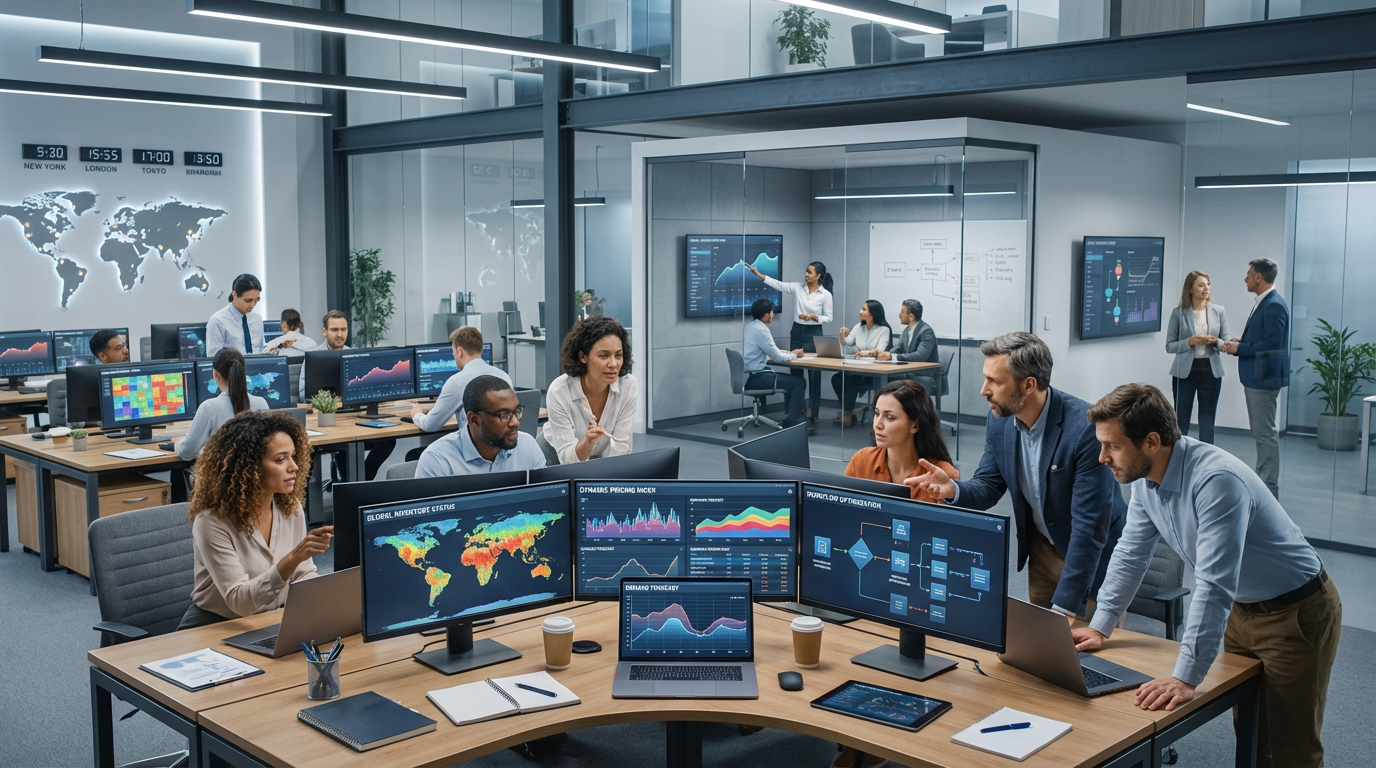
Square Restaurant Inventory by MarketMan connects what’s happening at the front of house directly to the back, so operators have a real-time picture of their stock, their costs, and their margins. The problem this AI is solving isn’t just operational. It’s giving operators the clarity and confidence to run their business instead of constantly reacting to it.
Restaurants have traditionally relied on manual processes for inventory and purchasing. What were the key inefficiencies you aimed to eliminate with this integration?
James: The inefficiencies in restaurants are felt on a human level, and that’s what makes them so costly. A manager doing inventory counts at 6am. A chef manually converting bulk orders to per-item costs in a spreadsheet. Purchasing decisions made on gut feel because there wasn’t time to pull the data.
The big ones we set out to eliminate are: the disconnect between sales and stock, the lag between when a cost problem starts and when someone notices it, and the manual overhead of managing vendors across multiple locations. Removing that is transformative for a business.
When you automate purchasing, sync your POS to your inventory in real time, and scan invoices instead of entering them by hand, you’re not just saving administrative time, but returning it to what actually defines their business: hospitality, connection, and craft.
The platform connects front-of-house sales with back-of-house inventory and cost data. How does that real-time visibility change decision-making for restaurant owners and managers?
James: It shifts operators from being reactive to proactive, and that change is make-or-break in this climate, in which margins are razor-thin.
Right now, a lot of operators find out a menu item has become unprofitable at month-end. Or they run out of a key ingredient mid-service because the reorder didn’t happen in time. By the time they know about the problem, they’ve already absorbed the cost and didn’t realize they’d been giving money away.
Real-time visibility breaks that cycle. When a supplier raises prices, you can see immediately how it affects your margin before you’ve run a weekend’s worth of service at the wrong price point. And when managers aren’t stuck chasing down information, they can be present on the floor, with their team, and with guests. That’s what this business is actually about and why they got into it in the first place. Our job is to ease some of the backend load to get them back to what matters.
Features like automated purchasing, forecasting, and margin tracking suggest a shift toward more data-driven kitchens. How do you ensure these tools remain practical and easy to use for busy teams?
James: If it adds work, it’s failed. That’s the standard we hold ourselves to when building our products.
A restaurant team doesn’t have time to learn a new platform between the lunch rush and dinner prep. So everything has to work in the background, ideally in one place. We aim to help surface the right information at the right moment, take action where we can, and never draw attention away from customers where focus belongs.
We’re also deeply aware that the frontline reality of a restaurant is nothing like a corporate office. Rotating staff, mid-shift decisions, managers on a tablet. Our tools have to fit that reality, not the other way around.
As restaurants continue to adopt more integrated technology stacks, how do you see platforms like this shaping the future of restaurant operations and profitability?
James: The future I’m most excited about isn’t restaurants with more technology, it’s restaurants with the right technology that works seamlessly in the background, so operators can finally see their whole business clearly and act on it.
For too long, the tools that helped a restaurant run well were reserved for large chains with enterprise budgets. The independent operator has been working with a fraction of the information and decision-making power. That’s the gap we’re closing.
What this unlocks, at scale, is the ability for any operator to do what the best have always done: understand what’s driving margin, make small continuous adjustments, and turn first-time guests into regulars. The best restaurants aren’t defined by their efficiency. They’re defined by their people, connections with customers, and their environment. Our job is to make sure technology is protecting that.
Toward a More Transparent and Sustainable Restaurant Model
As restaurants face rising costs and increasing complexity, the ability to see and respond to changes in real time is becoming less of a luxury and more of a necessity. Tools like Square Restaurant Inventory by MarketMan suggest a shift toward systems that quietly handle the operational burden while giving operators clearer control over their business.
If that shift continues, the next generation of restaurants may be defined not by how much technology they use, but by how seamlessly it supports the craft, the team, and the guest experience at the center of it all.