As online retail matures and customer acquisition becomes more expensive, Shoplazza’s latest awards highlight a shift toward infrastructure-first growth—where AI, payments, and logistics matter as much as branding.
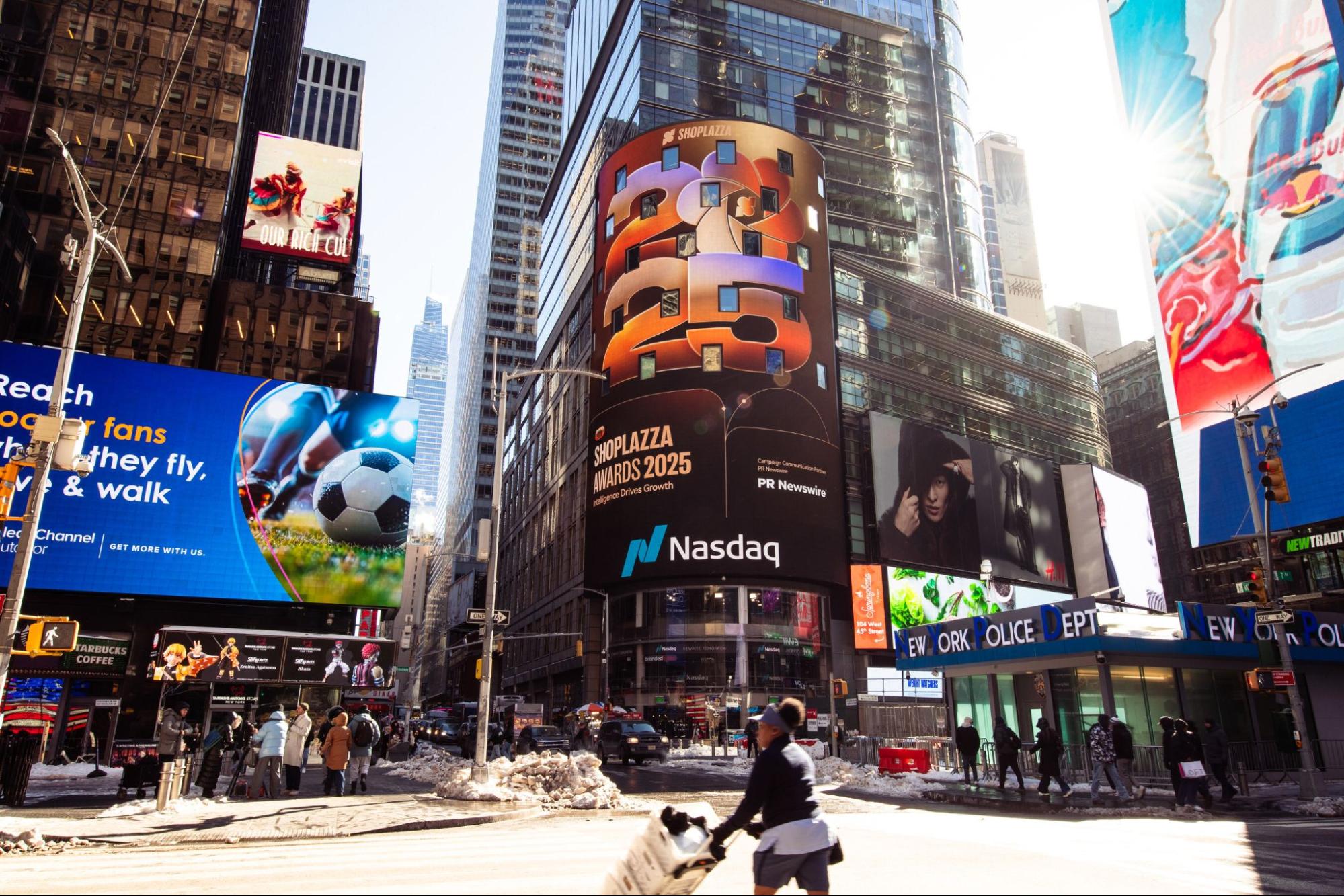
Shoplazza used a familiar New York symbol—the Nasdaq Tower in Times Square—to announce the winners of its 2025 Shoplazza Awards, marking the program’s fourth year. But beneath the spectacle, the message was less about celebration and more about how e-commerce is evolving into a discipline of execution, where long-term stability increasingly outweighs short-term growth bursts.
This year’s merchant winners, spanning categories from smart mobility to premium lifestyle goods, reflect how global expansion is becoming more brand-led and operationally demanding. Shoplazza pointed to recurring themes such as earlier investment in site optimization, localization, and customer relationships—signals that merchants are building structured systems rather than relying on one-off marketing spikes. The emphasis suggests a market where success is tied to operational consistency across regions, not just product novelty.
The selected merchants illustrate how different industries are approaching the same challenge: scaling without increasing complexity. Brands like GMKtec and SAFNIX represent hardware companies pushing into global direct-to-consumer models, while ICOICE and KuKirin highlight how fashion and high-ticket products depend on repeat customers and dependable fulfillment. Meanwhile, niche brands such as Babeside and Real Silk Life underscore that trust and long-term product differentiation can still be powerful drivers, even in highly specialized markets.
Just as notable is the attention given to the ecosystem partners behind the storefront. The awards recognized marketing, payments, and logistics providers—including Checkout.com, PayPal, Cainiao, and YunExpress—reflecting how these operational layers increasingly shape conversion rates and customer retention. In today’s global commerce environment, a smooth checkout and reliable delivery can define brand reputation as much as design or advertising.
Shoplazza also introduced an AI Innovator category, signaling that artificial intelligence is moving beyond experimentation and into revenue-critical infrastructure. Honorees such as Stripe, Sandwich Lab, and Subotiz were positioned as examples of AI being embedded into workflows like billing, risk management, and subscription models, where automation can directly influence profitability and scalability.
Taken together, the awards function less like a traditional industry trophy and more like a snapshot of what modern e-commerce requires. As platforms and merchants confront tighter margins and higher customer expectations, the winners suggest a simple conclusion: the future belongs to brands that treat growth as a system—built deliberately, measured carefully, and designed to last.