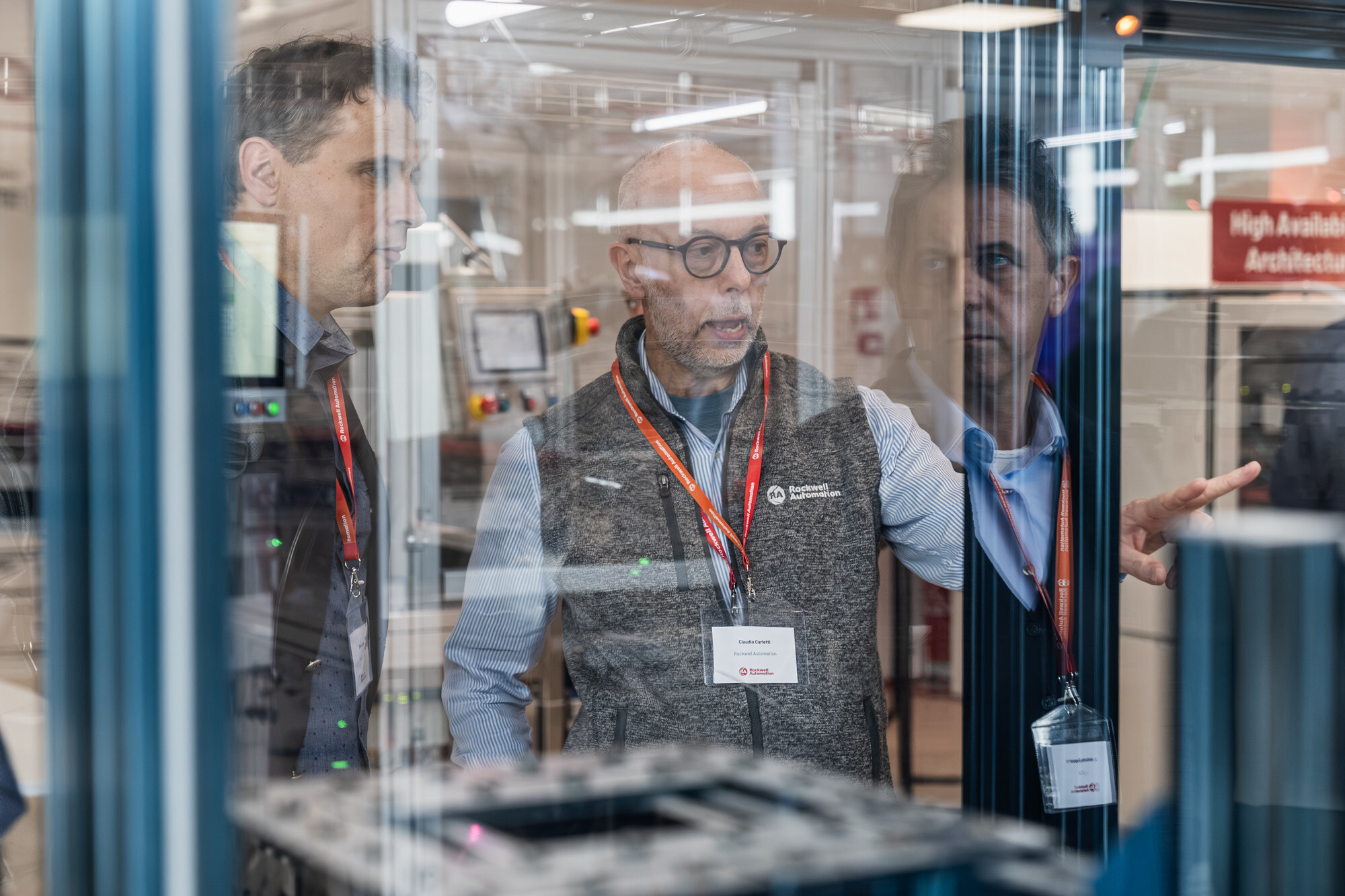
As industrial companies confront rising complexity and demand for efficiency, Rockwell Automation’s latest showcase points to a broader transition from automated processes to increasingly autonomous operations.
Rockwell Automation is using Hannover Messe 2026 to demonstrate how manufacturers are moving beyond traditional automation toward systems that can adapt and respond with minimal human intervention. The company’s focus on industrial AI, digital engineering, and cybersecurity reflects a growing effort to make autonomy practical in real-world production environments.
This shift is not simply about adding intelligence to machines, but about rethinking how entire operations function. By embedding AI directly into industrial systems, manufacturers can analyze data in real time, adjust processes dynamically, and anticipate issues before they disrupt production. Such capabilities are becoming more relevant as supply chains grow more complex and downtime carries higher costs.
The emphasis on digital twins and simulation tools also highlights how design and operations are becoming more interconnected. Technologies that allow manufacturers to model and test processes virtually before deployment can reduce risk and accelerate implementation, particularly in large-scale or highly regulated industries.
At the same time, the move toward autonomy introduces new challenges, especially around cybersecurity and system reliability. As operational technology becomes more connected, protecting critical infrastructure from disruption becomes a central concern, requiring security measures to be integrated from the outset rather than added later.
Rockwell Automation’s approach reflects a broader convergence between information technology and industrial systems. Partnerships with major technology providers and integration across platforms suggest that autonomy will depend as much on ecosystem collaboration as on individual product innovation.
For manufacturers, the transition from automation to autonomy represents a gradual but significant shift in how production is managed. Rather than relying solely on predefined processes, future systems may increasingly operate with a degree of independence, guided by continuous data and adaptive algorithms.
The developments showcased at Hannover Messe ultimately point to a manufacturing landscape where efficiency, resilience, and flexibility are driven not just by machines, but by systems capable of learning and responding in real time.