A new alliance between Villa Vie Residences and Avora Residences points to a maturing residential-at-sea market, where flexibility, tiered luxury, and long-term mobility are becoming defining features.
Villa Vie Residences has announced a strategic marketing alliance with Avora Residences that signals a notable shift in how residential cruising is evolving. Rather than positioning ships as isolated lifestyle products, the partnership frames life at sea as a networked housing model, where residents can move between experiences without abandoning continuity. The move reflects growing demand for long-term travel options that blend permanence with freedom.
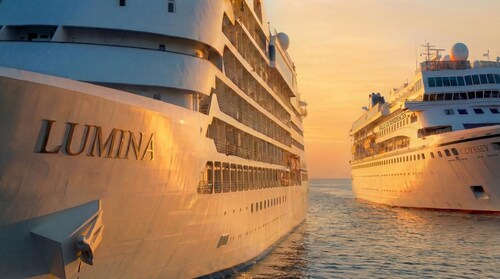
The alliance pairs Villa Vie’s more contemporary, accessible residential offering with Avora’s forthcoming luxury brand, anchored by its inaugural vessel, Lumina, set to debut in 2028. Together, the two brands outline a tiered approach to living at sea, offering different price points and experiences within a shared ecosystem. This structure mirrors trends seen in land-based residential development, where communities increasingly offer mobility across properties rather than a single fixed address.
At the center of the agreement is reciprocal access, allowing residents to share select privileges, itineraries, and guest benefits across ships. For residents, this promises greater geographic and seasonal flexibility, reducing the friction of committing to a single vessel or route. It also reframes residential cruising as participation in a broader lifestyle network rather than ownership of a single floating property.
The collaboration arrives as the residential-at-sea category shows signs of maturation beyond novelty. Early iterations focused on the idea that people could live full-time aboard ships; newer models are refining how that life functions over years, not months. By aligning marketing and access while maintaining separate operations, Villa Vie and Avora are testing whether scale and cooperation can coexist with distinct brand identities.
More broadly, the partnership hints at how long-term mobility itself is being redefined. As remote work, extended travel, and global living become more normalized, housing models that move with residents are gaining legitimacy. The Villa Vie–Avora alliance does not invent that trend, but it reflects an industry beginning to take it seriously, treating life at sea less as an escape and more as a durable, interconnected way of living.