As consumers seek more flexible and low-maintenance ways to monitor their homes, Reolink’s latest product highlights how solar power and on-device intelligence are reshaping expectations for everyday security systems.
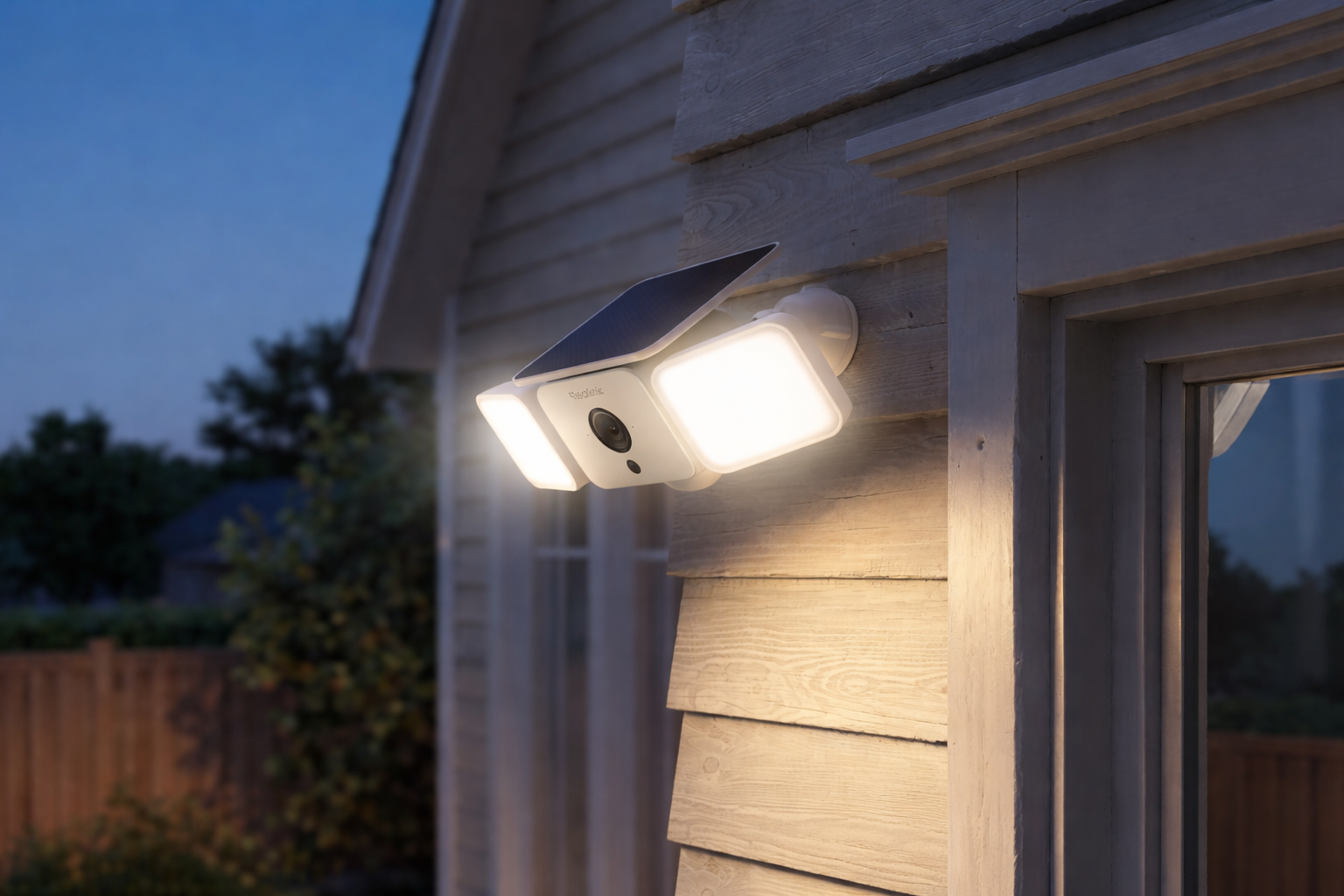
Reolink has introduced a new Solar Floodlight Cam as part of its annual spring sales event, positioning the device within a growing category of wire-free home security tools. The launch reflects broader changes in how surveillance technology is designed, with increasing emphasis on ease of installation and reduced dependence on traditional infrastructure.
At its core, the device combines a 2K-resolution camera, motion-activated floodlighting, and built-in AI detection capable of distinguishing between people, vehicles, and animals. These features point to a shift away from passive recording toward systems that can interpret activity and reduce unnecessary alerts, a common frustration among users of earlier security cameras.
Equally notable is the reliance on solar power, supported by a rechargeable battery designed to operate for extended periods without direct charging. This approach addresses one of the main barriers to adoption—complex installation—by removing the need for wiring, while also making such systems more viable in locations without consistent access to electricity.
The integration of app-based controls and real-time communication tools reflects how security products are increasingly tied to broader digital ecosystems. Users can monitor live feeds, adjust settings, and interact through two-way audio, suggesting that home surveillance is becoming more interactive and user-directed rather than purely observational.
Reolink’s broader product lineup, also featured during the promotional period, indicates a continued push toward higher-resolution imaging and expanded coverage capabilities. From multi-lens cameras to systems with large-scale storage, the company is aligning its offerings with consumer demand for both convenience and performance.
This evolution comes at a time when expectations around home security are shifting. Consumers are not only looking for protection but also for systems that integrate seamlessly into daily routines, requiring minimal upkeep while delivering reliable insights.
Reolink’s latest release illustrates how the category is moving toward accessibility and autonomy. As solar power, AI detection, and mobile connectivity converge, home security systems are becoming less about installation complexity and more about continuous, adaptable monitoring in a variety of environments.