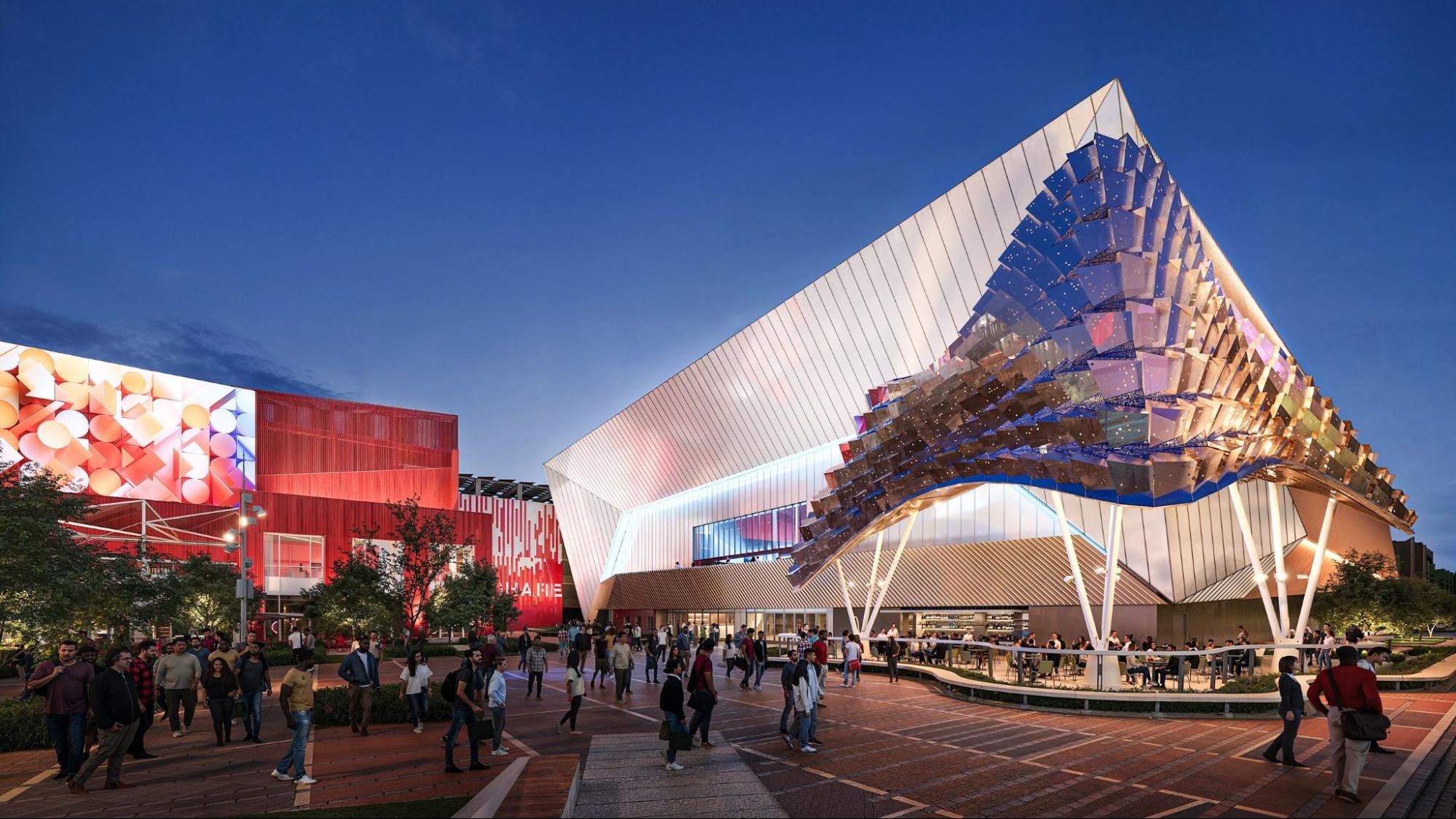
A 5,000-seat venue planned within Anaheim’s OCVIBE district reflects a broader shift toward integrated entertainment campuses designed to host artists at multiple stages of their careers.
OCVIBE, a large mixed-use development taking shape around the Honda Center in Anaheim, has revealed plans for a new 5,000-seat concert hall scheduled to open in early 2027. The venue, designed by architecture firm Populous, is part of a wider project intended to transform the surrounding area into a year-round destination for music, sports, dining, and public events.
The proposed concert hall occupies a middle ground in Southern California’s live entertainment landscape. Large arenas can host global touring acts, while smaller clubs nurture emerging talent, but mid-size venues—often considered ideal for artists building a following—are less common in Orange County.
OCVIBE’s design attempts to address that gap by creating a connected system of performance spaces. Artists could theoretically move from smaller stages within the district to the new concert hall and eventually to the nearby Honda Center, a larger arena already undergoing its own renovation and expansion.
The building itself is intended to support a wide range of events beyond concerts. Its flexible layout could accommodate comedy shows, esports competitions, television productions, and speaking engagements, reflecting the increasingly hybrid nature of modern entertainment venues.
Architects say the space was designed with both performers and audiences in mind, emphasizing acoustics, sightlines, and backstage amenities typically associated with larger arenas. The venue will also include outdoor gathering areas, hospitality spaces, and public art installations meant to connect it visually and physically with the broader OCVIBE district.
The concert hall forms part of a much larger development backed by private investment that aims to reshape roughly 100 acres around the Honda Center. Plans for the district include new dining venues, office space, residential housing, public parks, and multiple entertainment stages intended to operate throughout the year.
Projects like OCVIBE reflect a growing trend in urban development where entertainment, dining, and public space are planned together rather than separately. By clustering venues and attractions in one walkable area, developers hope to create destinations that remain active well beyond the hours of a single concert or sporting event.