At CES 2026, Kyocera’s focus on sensors, optics, and communication systems illustrates how advances in mobility increasingly depend on foundational components that quietly enable AI, autonomy, and connectivity.
Kyocera will arrive at CES 2026 with a portfolio of technologies aimed at what the company sees as the next phase of mobility, where intelligence is embedded into physical systems rather than layered on afterward. The announcements are less about consumer-facing gadgets and more about the components that allow vehicles, infrastructure, and machines to sense, communicate, and respond in real time. In that sense, Kyocera’s presence reflects how mobility innovation is shifting from bold concepts to enabling architectures.
Several of the technologies Kyocera plans to demonstrate speak to environments that are traditionally difficult for digital systems to navigate. Underwater wireless optical communication addresses a long-standing challenge in transmitting data beneath the surface, where radio signals degrade quickly and wired systems are costly. While such capabilities may seem niche, they point to broader applications in inspection, environmental monitoring, and subsea mobility where data access has been limited.
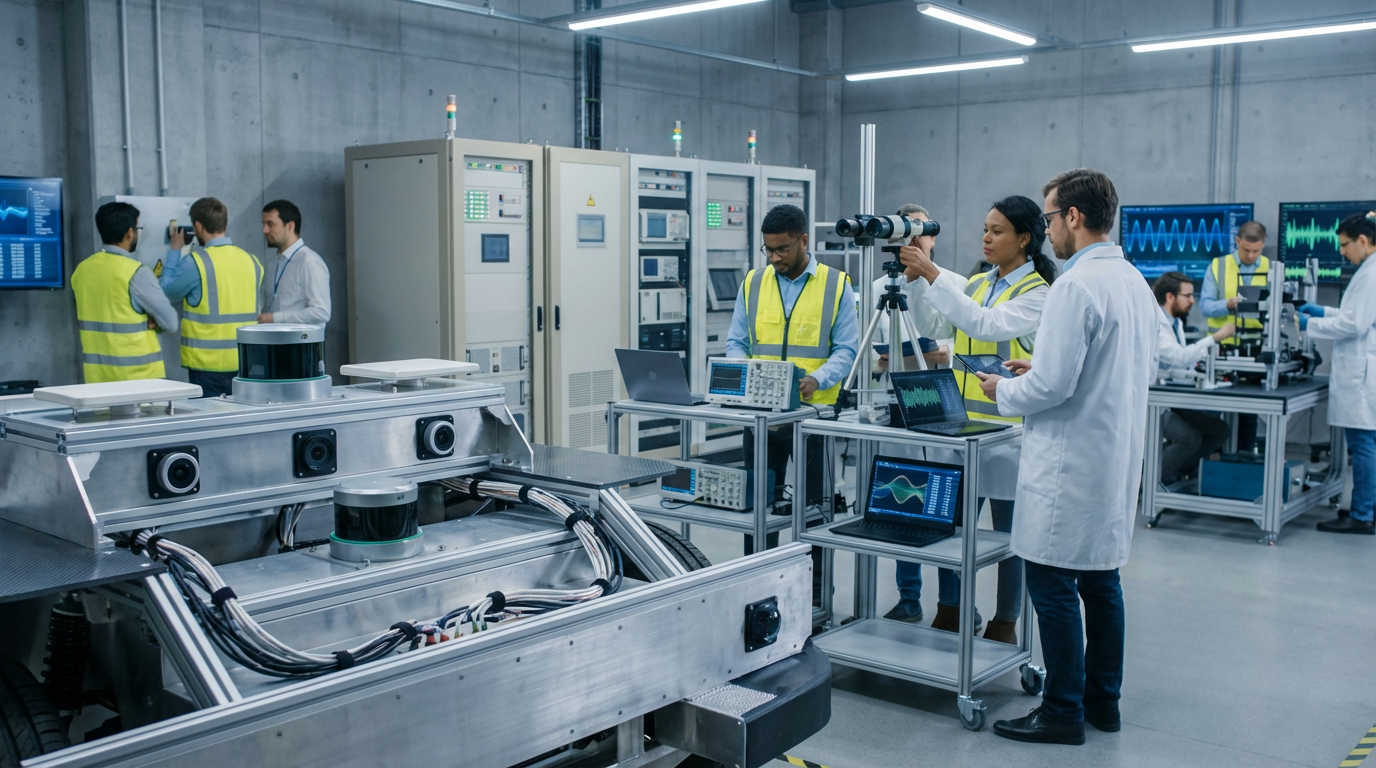
On land and in the air, Kyocera’s work centers on sensing and perception, areas critical to automation and advanced driver assistance. The triple-lens, AI-based depth sensor and high-resolution millimeter-wave sensor illustrate how close-range accuracy and reliability are becoming priorities as machines operate in tighter, more complex spaces. These components underline an industry reality: autonomy often hinges on incremental improvements in sensing fidelity rather than dramatic leaps in software alone.
The company’s optoelectronic modules and phased-array antenna demonstrations further emphasize efficiency as a design constraint. As AI workloads migrate closer to vehicles and edge devices, reducing power consumption and physical footprint becomes as important as raw performance. Kyocera’s emphasis on integration suggests an attempt to reconcile growing data demands with the physical limits of vehicles and embedded systems.
Taken together, Kyocera’s CES showcase offers a snapshot of how mobility innovation is maturing. Rather than framing progress as a single breakthrough, the company highlights a network of enabling technologies that quietly support autonomy, connectivity, and human-machine interaction. The significance lies not in any one device, but in the way these components collectively point toward a future where mobility systems are defined by what happens beneath the surface as much as what drivers and passengers can see.