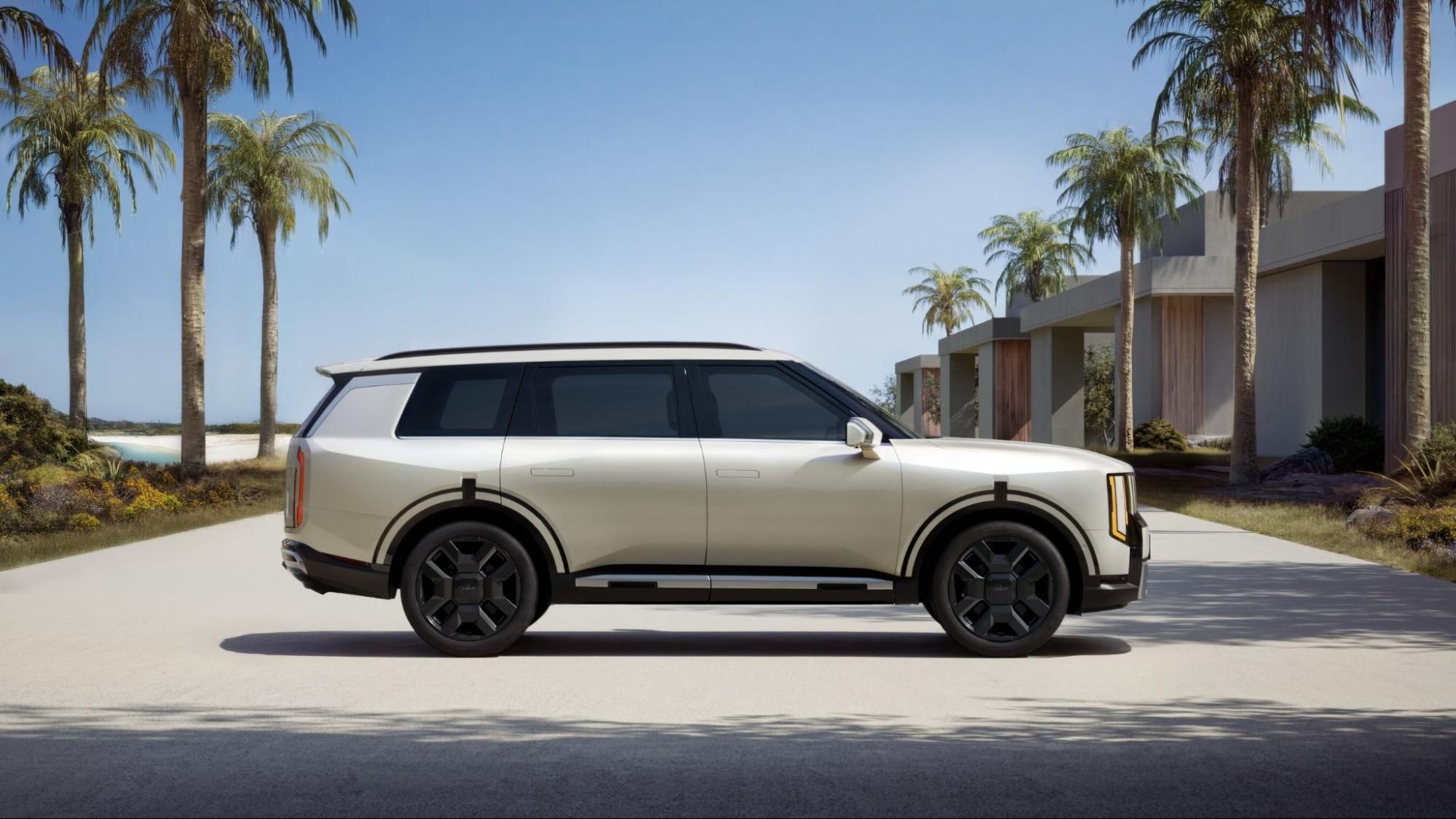
Starting under $47,000, the 2027 Telluride HEV blends three-row practicality with improved fuel economy, reflecting shifting expectations for large family SUVs.
Kia America is adding a hybrid option to one of its most recognizable models, announcing pricing for the first-ever 2027 Kia Telluride HEV. Starting at $46,490 for the front-wheel-drive EX trim, the three-row SUV pairs a turbocharged 2.5-liter engine with an electric motor and battery system, signaling how mainstream family vehicles are adapting to tighter efficiency standards and consumer demand for lower fuel costs.
The hybrid system produces a combined 329 horsepower and 339 lb.-ft. of torque, modestly increasing output over the previous gasoline-only Telluride. More notably, the EX FWD model carries an EPA-estimated 35 miles per gallon combined rating and an estimated range of 637 miles, figures that place it among the more fuel-efficient options in the midsize three-row segment.
For buyers who have gravitated toward large SUVs for space and versatility, the Telluride HEV attempts to soften the usual trade-offs. Kia says the 2027 model features larger dimensions than the outgoing generation, offering additional headroom and easier third-row access, along with expanded cargo space. The vehicle also retains a standard 4,500-pound towing capacity and offers all-wheel drive on select trims, underscoring that efficiency is being layered onto capability rather than replacing it.
The hybrid Telluride will be available in several trims, including EX, SX and higher-spec X-Line variants, with pricing climbing into the mid-$50,000 range. Assembly will take place at Kia’s West Point, Georgia plant, aligning with a broader industry push to localize production of high-demand models.
The arrival of a hybrid Telluride reflects a broader shift in the U.S. market, where electrification is no longer confined to compact cars or luxury vehicles. Instead, automakers are introducing hybrid systems into high-volume family SUVs, betting that incremental gains in fuel economy—rather than a full leap to all-electric—may resonate with buyers seeking familiarity alongside improved efficiency.