Dreame Technology’s premium brand showcased a lineup of experimental displays and audio systems, reflecting how television makers are blending artificial intelligence, advanced lighting, and immersive design.
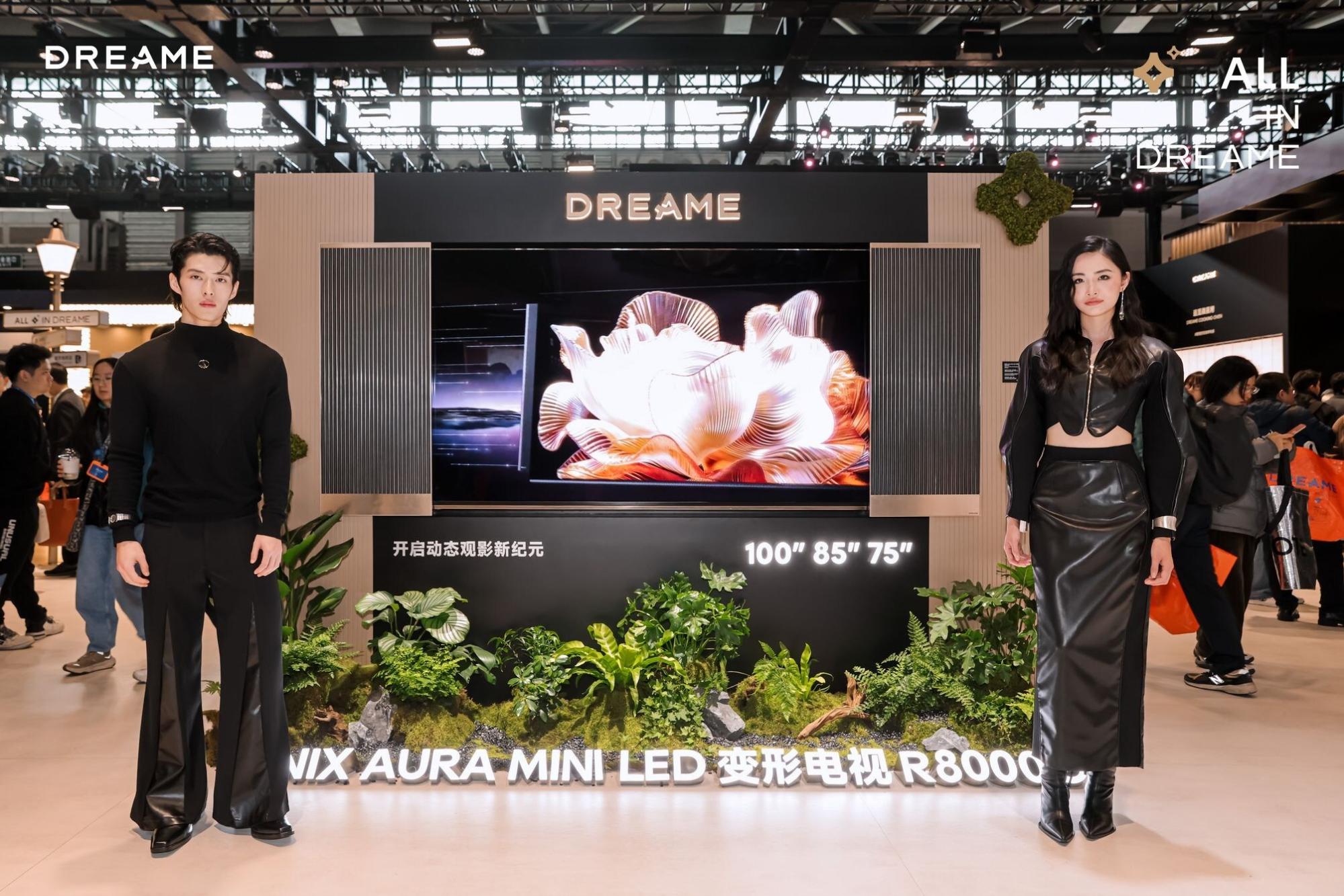
Dreame Technology’s premium audio-visual brand INNIX introduced a series of new television and home-cinema technologies at the Appliance & Electronics World Expo 2026 in Shanghai. The showcase included televisions, projection systems, and display walls designed to explore how artificial intelligence and new display engineering might reshape the experience of watching films and television at home.
Consumer electronics companies increasingly treat events like AWE as stages for experimental features that signal where the industry may be heading. INNIX’s presentation focused on combining picture quality, sound design, and automation into integrated systems intended for living rooms, dedicated home theaters, and high-end media spaces.
One of the central concepts demonstrated was a television system called the Aura Mini LED R8000, which links the physical movement of the device to its sound performance. As the display shifts position, built-in speakers adjust the direction of audio so that sound remains aligned with the viewer’s location, illustrating how sensors and mechanical components are being combined to create more dynamic viewing environments.
Other prototypes emphasized advances in display technology itself. RGB Mini LED backlighting aims to improve color control and brightness by using red, green, and blue light sources simultaneously, while a separate red-light quantum-dot system attempts to expand color range while reducing eye strain during long viewing sessions.
The company also presented a 136-inch Micro LED display wall designed for large home theaters and an experimental projection system built around a 3LCoS optical engine. Both systems highlight the continuing push toward cinema-scale visuals within residential spaces, a trend driven partly by the growing popularity of streaming content and high-resolution video.
Artificial intelligence served as the connective layer across the lineup, powering image processing, automated adjustments, and smart-home integration. Rather than treating TVs, projectors, and speakers as separate devices, manufacturers increasingly frame them as components within a connected ecosystem that adapts automatically to content, room conditions, and viewer preferences.
While many of these technologies are still evolving, their appearance at major electronics exhibitions suggests how rapidly home entertainment hardware is changing. As display quality approaches cinematic standards and AI handles more technical adjustments behind the scenes, the traditional television may gradually transform into a far more adaptive and immersive entertainment system.