The experimental certificate allows the aerospace startup to begin flight testing its latest prototype, part of a step-by-step program aimed at reviving faster-than-sound aviation technologies.
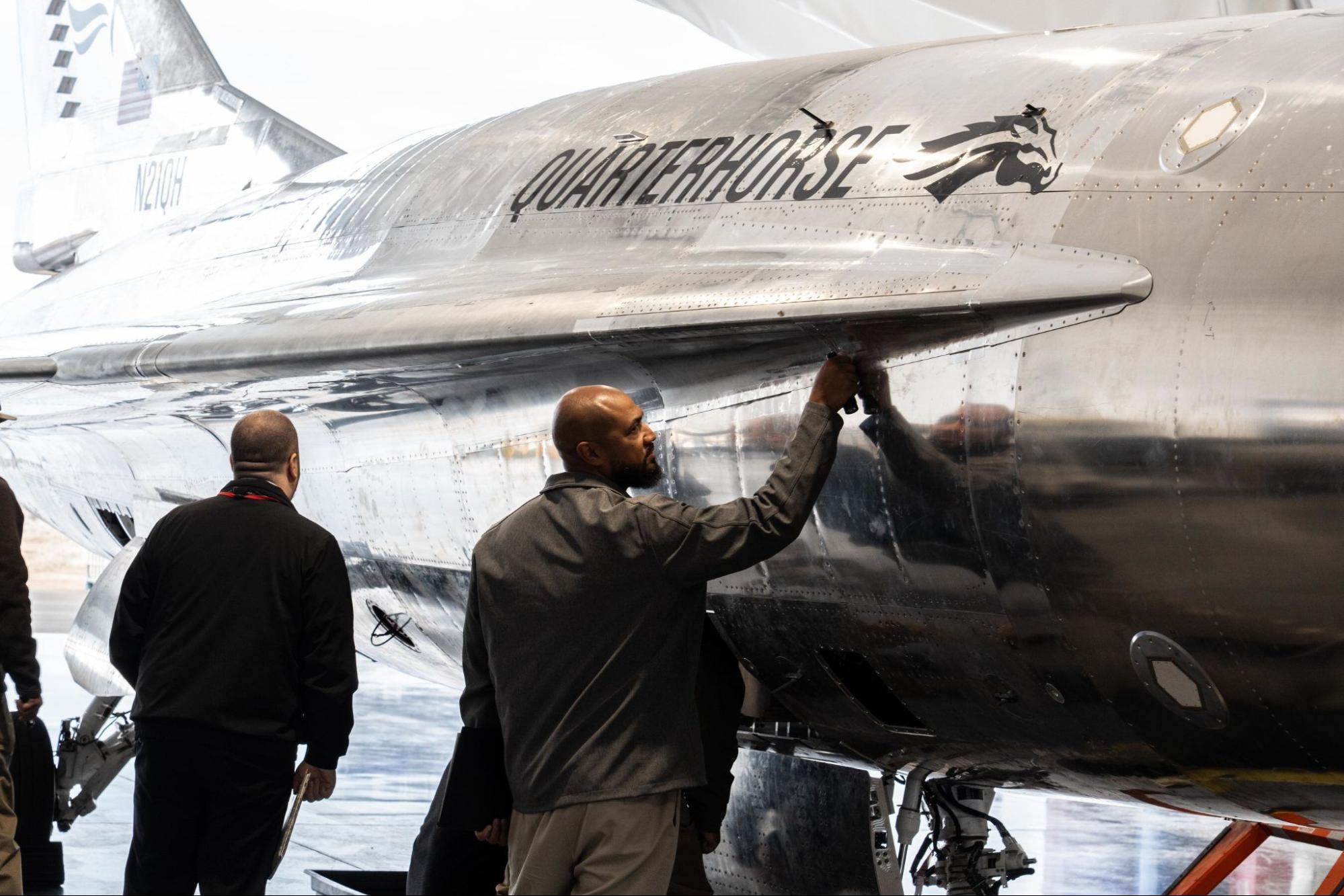
Hermeus has received a Special Airworthiness Certificate in the experimental category from the U.S. Federal Aviation Administration for its Quarterhorse Mk 2.1 aircraft, clearing the way for flight testing of the unmanned prototype. The certification follows roughly a year of collaboration between the Atlanta-based aerospace company and federal regulators as the aircraft moved from development to testing readiness.
The Quarterhorse program is central to Hermeus’ effort to accelerate the return of high-speed flight technologies. Rather than developing a single aircraft through a long design cycle, the company is pursuing an iterative approach in which successive prototypes are built and tested to generate data that informs the next design.
Quarterhorse Mk 2.1 represents the largest and most advanced aircraft produced in the program so far. With regulatory approval now in place, the aircraft will enter a flight-test campaign intended to explore performance at progressively higher speeds and altitudes.
Testing is taking place at Spaceport America in New Mexico, within the restricted airspace of White Sands Missile Range. The location provides the controlled environment typically required for experimental aircraft programs, where engineers can evaluate aerodynamic performance and gather telemetry without interfering with commercial air traffic.
Interest in high-speed aviation has grown in recent years as startups and established aerospace companies revisit technologies that largely disappeared after the retirement of supersonic passenger travel. Advances in materials science, propulsion, and computational design have renewed speculation that faster-than-sound aircraft could once again play a role in both military and commercial transportation.
Hermeus has positioned its work within that broader resurgence, emphasizing rapid prototyping and frequent testing rather than lengthy development timelines. Each Quarterhorse aircraft functions as a learning platform, helping engineers refine designs for future vehicles capable of sustained high-speed flight.
While the company’s long-term ambitions extend beyond experimental prototypes, the immediate goal is more practical: gathering the real-world data needed to push aircraft performance toward supersonic speeds. For aerospace engineers, the approval of Quarterhorse Mk 2.1 marks another step in an incremental process that could eventually reshape how high-speed flight is designed and tested.