Garmin’s latest sonar and motorized control system highlights how advanced imaging and navigation tools are transforming recreational fishing into a data-driven activity.
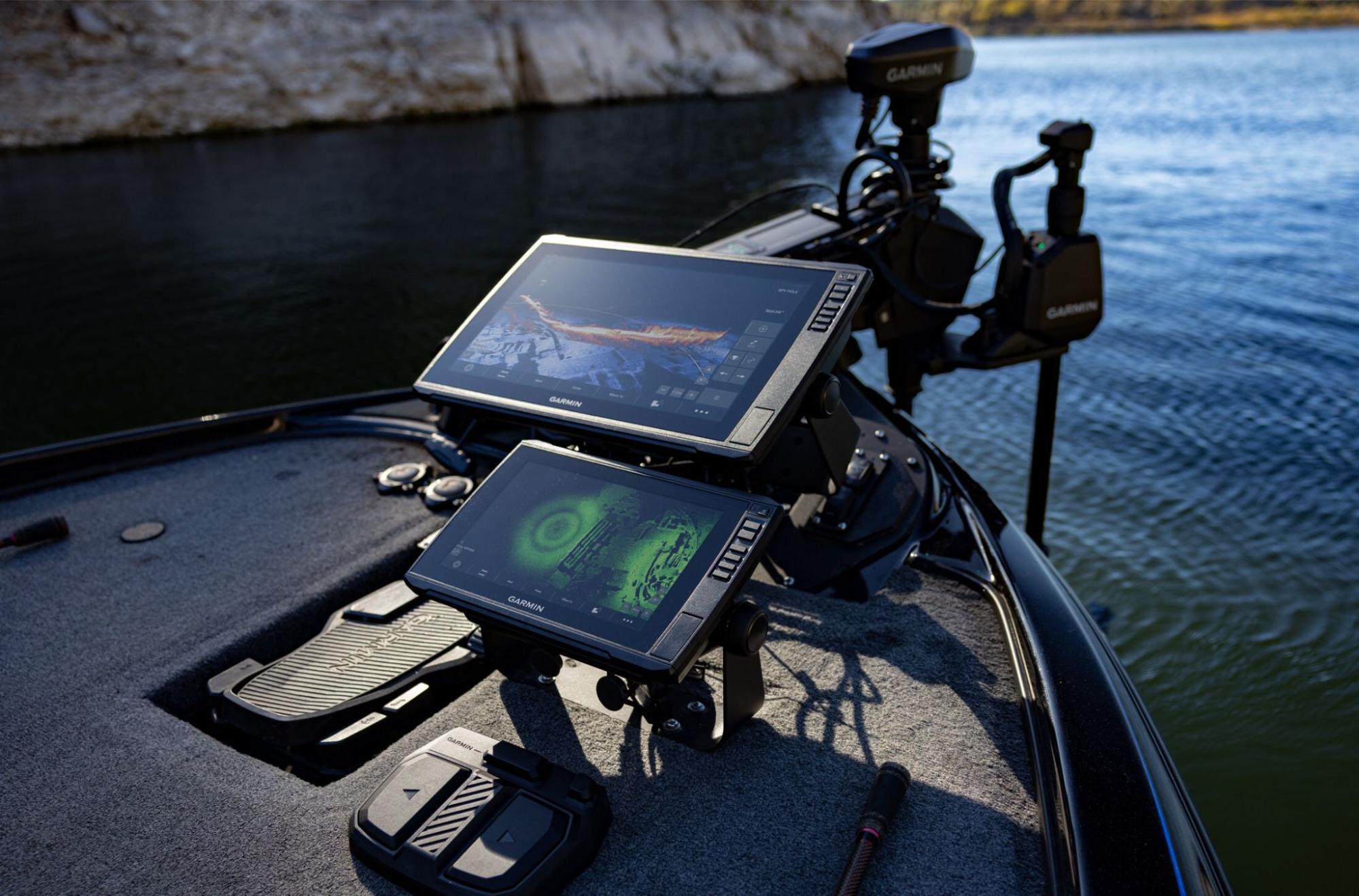
Garmin has introduced a new sonar system designed to give anglers a full 360-degree view of the underwater environment around their boats. The technology, developed by Garmin International, combines a scanning transducer with a motorized control device known as the Spy Pole, allowing fishermen to visualize fish and underwater structures from multiple directions.
The launch illustrates how recreational fishing is becoming increasingly shaped by digital technology. Tools once associated with commercial maritime navigation—such as sonar mapping, GPS positioning, and real-time data visualization—have steadily moved into consumer equipment used by hobbyists and professional anglers alike.
Garmin’s system centers on a scanning sonar transducer capable of producing two- and three-dimensional imagery of the surrounding water. Instead of repeatedly sweeping an area to locate fish, the device can capture a wide field of underwater information and store that data temporarily, allowing anglers to study terrain and movement patterns before casting a line.
The accompanying Spy Pole adds another layer of control by allowing the sonar to be directed independently of the boat’s trolling motor. This separation may seem subtle, but for anglers navigating around structures such as submerged trees, rock formations, or docks, the ability to steer sonar imaging without moving the boat can significantly change how fishing strategies unfold.
Modern sonar systems increasingly resemble mapping tools rather than simple fish finders. By combining GPS data with sonar imagery, these systems attempt to maintain accurate spatial positioning, helping anglers keep track of underwater structures even as the boat drifts or changes direction.
Such features reflect broader trends in outdoor recreation, where technology continues to reshape traditional activities. From GPS-enabled hiking devices to smart cycling systems, digital tools are increasingly integrated into sports that were once defined primarily by physical skill and local knowledge.
For fishing enthusiasts, the shift has been especially visible in competitive angling. High-resolution sonar and live underwater imaging have sparked debates within the sport about the balance between technological assistance and traditional technique.
Still, innovation continues to drive the marine electronics market. Garmin’s latest system will debut publicly at the Bassmaster Classic in Tennessee, one of the sport’s most prominent tournaments, where professional anglers and recreational fishermen alike often encounter the newest gear shaping the future of the sport.
Whether viewed as a practical tool or a technological leap, devices like Garmin’s 360-degree sonar system illustrate how fishing—one of humanity’s oldest activities—is steadily adapting to the digital age.