
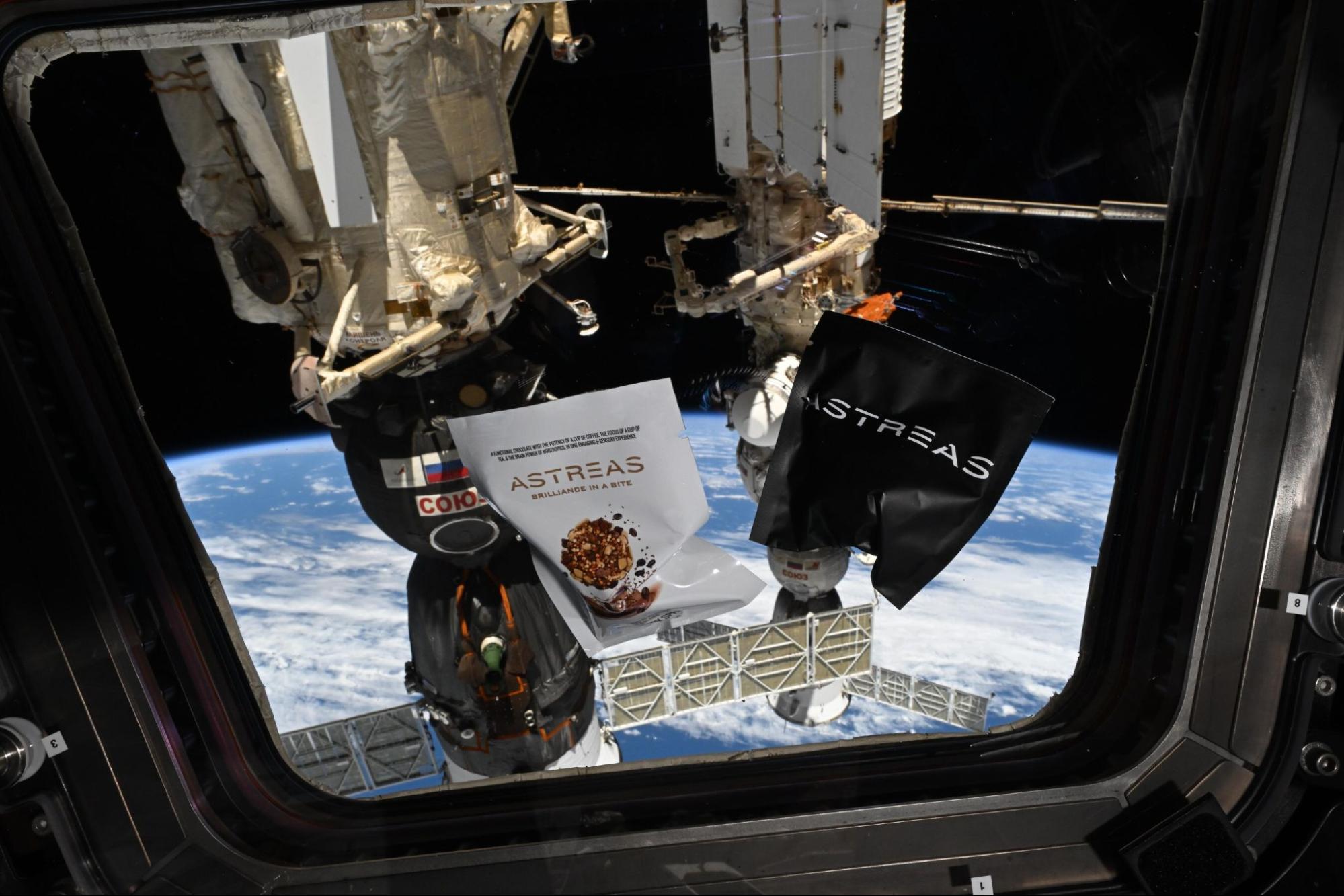
The company’s inclusion in the Artemis II mission highlights how space research continues to influence nutrition, with implications for both astronaut health and emerging consumer products
Astreas Nutrition Ltd. has taken an unusual step in validating its products by sending them beyond Earth’s atmosphere. The company’s Performance Spheres, a chocolate-based functional food, were included in NASA’s Orion spacecraft during the Artemis II mission, where they were consumed by astronauts as part of the onboard food system.
The milestone is notable less for novelty than for what it represents about evolving approaches to nutrition in extreme environments. Space missions place unique demands on the human body, requiring foods that are compact, stable, and capable of supporting sustained cognitive and physical performance. By participating in this context, Astreas aligns itself with a long tradition of using spaceflight as a testing ground for innovations that may later reach broader markets.
The formulation of the product reflects this focus on performance. Combining dark chocolate with ingredients such as citicoline, L-theanine, and finely ground coffee, the spheres are designed to provide steady energy and mental clarity rather than short bursts of stimulation. While such combinations are increasingly common in consumer wellness products, their use in space introduces additional scrutiny around consistency, safety, and functional benefit.
Astreas’ involvement also stems from earlier participation in NASA’s Deep Space Food Challenge, an initiative aimed at developing sustainable food systems for long-duration missions. In that context, food is understood not only as fuel but as a factor in psychological well-being, helping maintain morale and cohesion in isolated, high-pressure conditions. This dual role of nutrition—supporting both body and mind—has become a central consideration in planning future missions to the Moon and Mars.
Although the immediate impact of sending a specialized chocolate product into orbit may be limited, the broader implications are more substantial. Efforts like this illustrate how private companies are contributing to research traditionally led by public agencies, while also exploring how space-driven innovations can translate into everyday applications. In that sense, the experiment is as much about the future of human performance on Earth as it is about sustaining it in space.