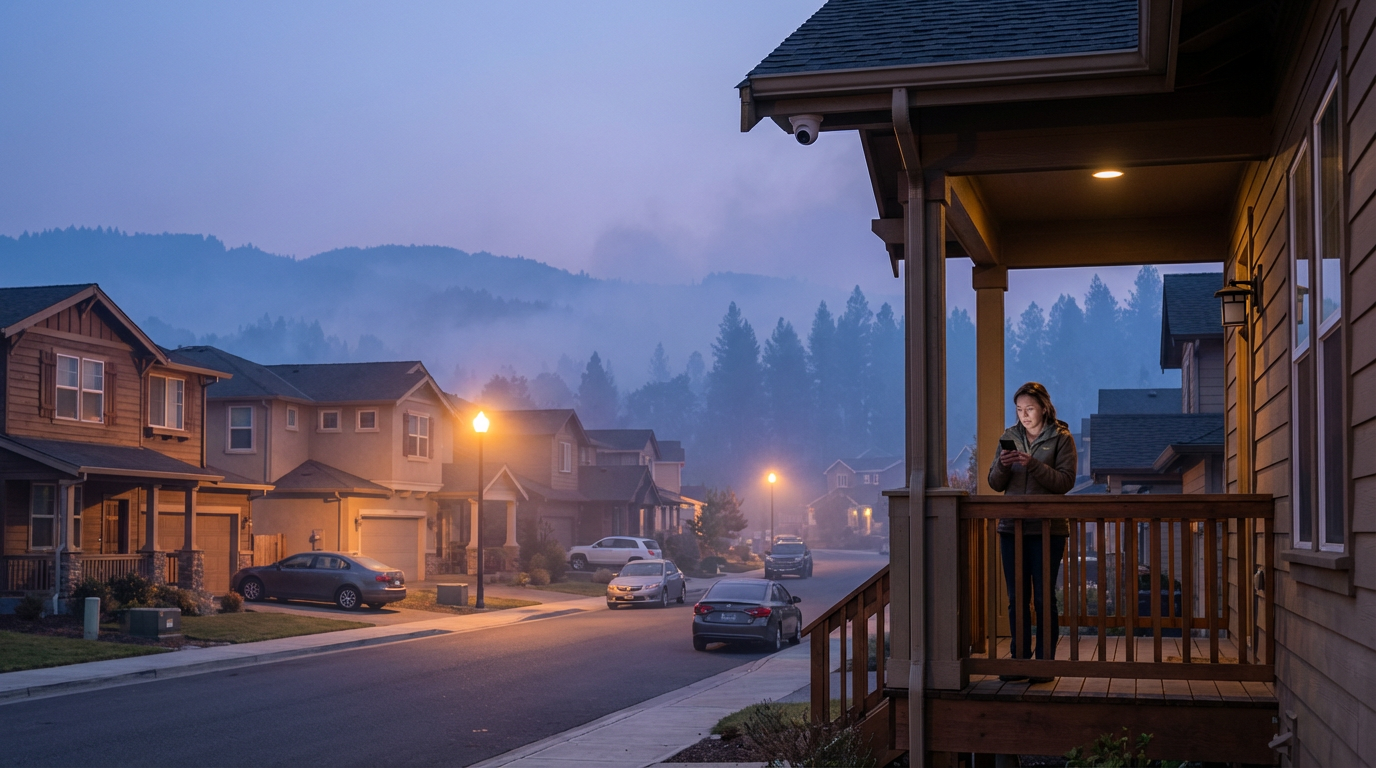
A new collaboration between Ring and Watch Duty reflects how consumer technology is adapting to wildfire reality, blending community data, AI detection, and emergency response into a shared early-warning system.
Ring’s introduction of Fire Watch marks a notable moment in the evolution of neighborhood safety technology, as wildfire and smoke risk become persistent features of life in many regions. Developed in collaboration with Watch Duty, the feature reflects a broader shift from passive monitoring toward active, situational awareness during emergencies. Rather than focusing on crime prevention alone, Ring is positioning its platform within a growing category of climate-related safety tools.
The timing matters. One year after devastating fires in the Los Angeles area, Fire Watch acknowledges that traditional alert systems often struggle to keep pace with fast-moving fire conditions. By combining official alerts from Watch Duty with AI-powered smoke and fire detection from Ring cameras, the feature aims to reduce the information gap that can emerge in the earliest moments of an incident. That gap is often when communities are most vulnerable and decisions most consequential.
A central element of Fire Watch is voluntary community participation, allowing camera owners to share periodic snapshots during active fire events. This approach reflects a growing recognition that “ground truth” from residents can complement satellite data and official reports, particularly when visibility is limited or conditions are changing rapidly. The model also raises important questions about trust and responsibility, as everyday users become contributors to emergency intelligence.
For first responders, the value lies in context rather than volume. Real-time visuals and localized reports can help emergency services better understand where smoke is thickening, flames are spreading, or evacuations may soon be needed. Fire Watch does not replace existing emergency systems, but it illustrates how consumer technology platforms are increasingly being woven into public safety ecosystems rather than operating at their edges.
More broadly, Fire Watch reflects how climate-driven risks are reshaping expectations of technology companies. As wildfires intensify and spread beyond historically affected areas, tools once designed for convenience or security are being asked to serve more critical functions. Ring’s collaboration with a nonprofit like Watch Duty suggests an emerging model where private platforms, civic organizations, and communities share responsibility for preparedness.
The significance of Fire Watch is less about novelty than direction. It points to a future in which neighborhood technology is judged not only by how it protects property, but by how effectively it helps people navigate environmental crises together.