New installations aim to extend the observation deck beyond panoramic views, blending interactive design, light, and sound into a layered journey that reshapes how visitors engage with New York’s skyline.
Edge at Hudson Yards is preparing a significant transformation that reflects a broader shift in how urban landmarks compete for attention. Rather than relying solely on height and views, the attraction will introduce permanent indoor installations designed to create a multi-sensory experience before visitors even step onto the outdoor sky deck.
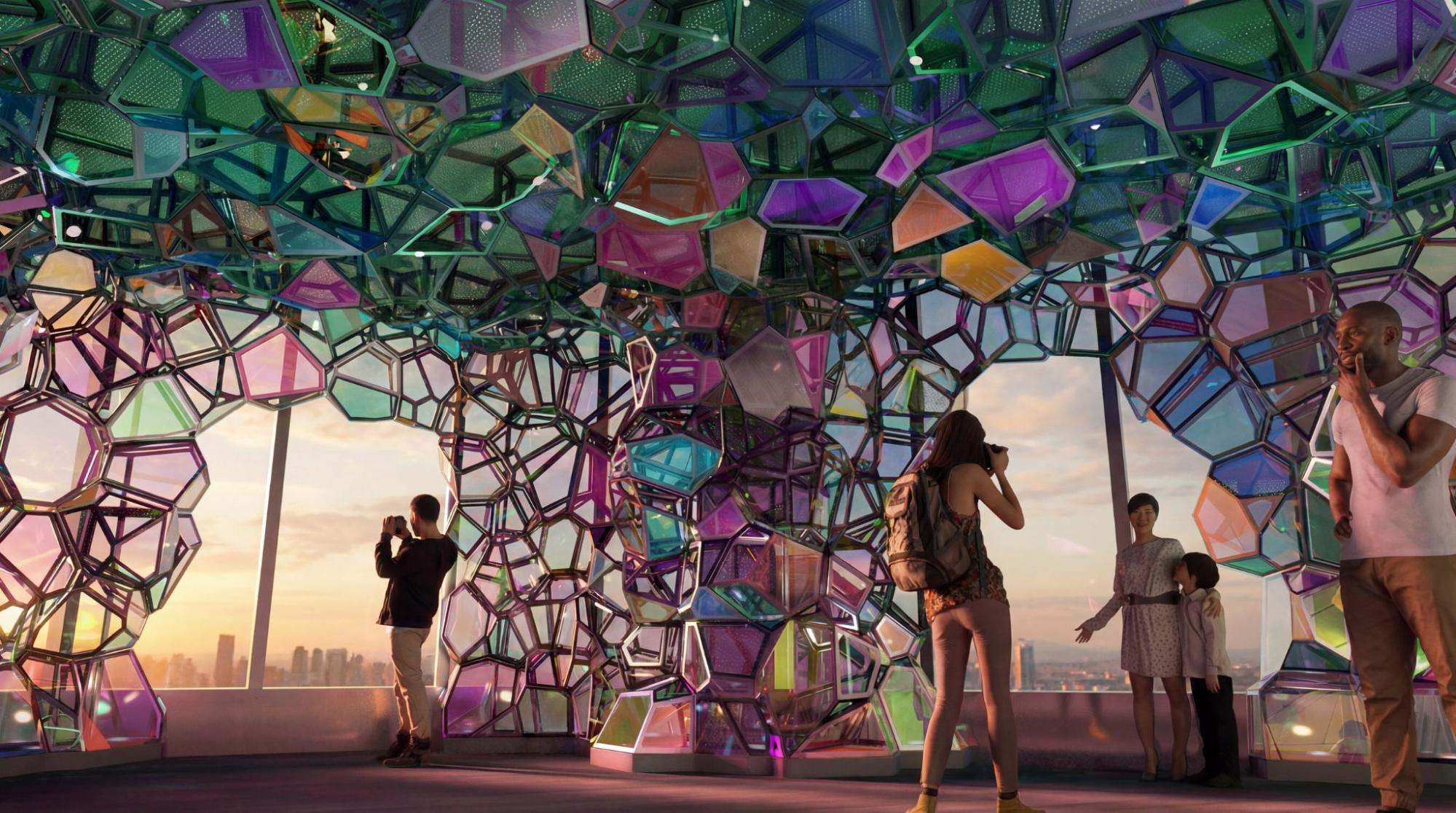
The planned redesign spans the journey from entry to the 100th-floor observation point, incorporating immersive environments that evolve throughout the day. Installations such as “Pulse,” “Crystal Cave,” and “Infinite City” use light, sound, and reflective materials to reinterpret the energy and structure of New York itself. The intent is not just to frame the skyline, but to reimagine it through abstract, interactive spaces that shift with natural light and time.
This approach reflects a growing trend in experiential design, where destinations seek to create repeatable visits through changing sensory elements rather than static attractions. By collaborating with studios like Moment Factory and SOFTlab, Edge is aligning itself with entertainment-driven design practices more commonly seen in themed environments and large-scale exhibitions. The result suggests a hybrid between observation deck and immersive installation.
The addition of updated hospitality offerings and a permanent nightlife component further signals a repositioning of the space. Dining, cocktails, and live music experiences are being integrated into the environment, extending the visit beyond sightseeing into something closer to a curated social setting. This layered approach reflects an effort to capture both tourists and local audiences looking for evolving, shareable experiences.
While the outdoor sky deck remains the central draw, the redesign indicates that the value of such landmarks is increasingly tied to how they stage the journey leading up to the view. In that sense, Edge’s transformation points to a broader recalibration of urban attractions, where atmosphere, narrative, and interactivity are becoming as important as the skyline itself.