DongCheng’s DCK brand uses a major hardware trade fair to highlight its shift toward integrated product systems, reflecting how tool manufacturers are adapting to efficiency and ecosystem-driven demand.
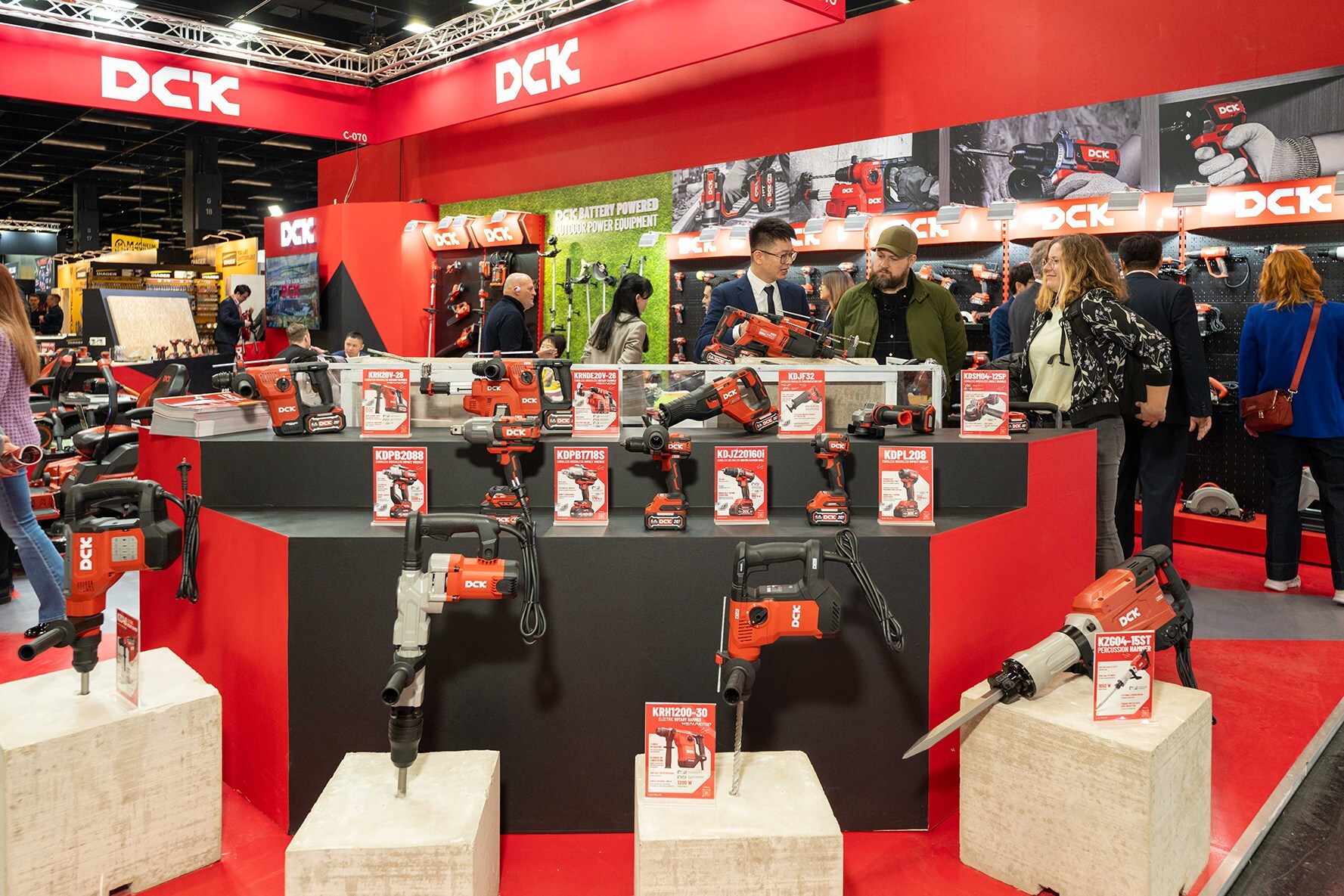
DongCheng’s DCK Tools brand used the 2026 International Hardware Fair in Cologne to present an expanded portfolio of professional power tools and outdoor equipment, signaling a broader push into the European market. The showcase reflects a strategic effort to move beyond individual products toward a more unified, system-based offering.
At the center of the display was a range of tools built around shared battery platforms, including 20V, 40V, and 58V systems. This approach addresses a practical concern for professional users, who often manage multiple tools across job sites and benefit from reduced complexity when batteries and components are interchangeable.
The company also introduced a wider selection of outdoor equipment, including robotic lawn mowers and zero-turn riding mowers, marking a shift into adjacent categories. This expansion suggests an attempt to position DCK as a provider of comprehensive solutions rather than a manufacturer of standalone tools.
Trade shows like EISENWARENMESSE serve as important testing grounds for such strategies. By offering hands-on demonstrations and engaging directly with distributors and users, companies can gather feedback that shapes both product development and regional market positioning.
The emphasis on cross-platform compatibility and integrated ecosystems reflects broader changes in the tools industry. As equipment becomes more advanced and interconnected, efficiency is increasingly defined not just by individual performance but by how well products work together within a larger system.
For European markets, where professional standards and regulatory expectations can differ from other regions, building trust and demonstrating reliability are key. Participation in established industry events signals a commitment to long-term engagement rather than short-term market entry.
DCK’s expanded portfolio also highlights how competition in the sector is evolving. Manufacturers are no longer competing solely on durability or power but on usability, system coherence, and the ability to support a wide range of applications with fewer, more adaptable components.
Ultimately, the company’s presentation in Cologne points to a larger industry transition. As user expectations shift toward convenience and integration, toolmakers are rethinking how their products fit into broader workflows.
In that context, DCK’s European push is less about introducing new tools and more about redefining how those tools are organized and used. The success of such strategies will likely depend on how effectively companies can translate technical innovation into everyday efficiency for professionals.