With 11,000 attendees and strong government visibility, Consensus by CoinDesk turned Hong Kong into a staging ground for the next phase of digital assets—less hype-driven, more institutional and policy-oriented.
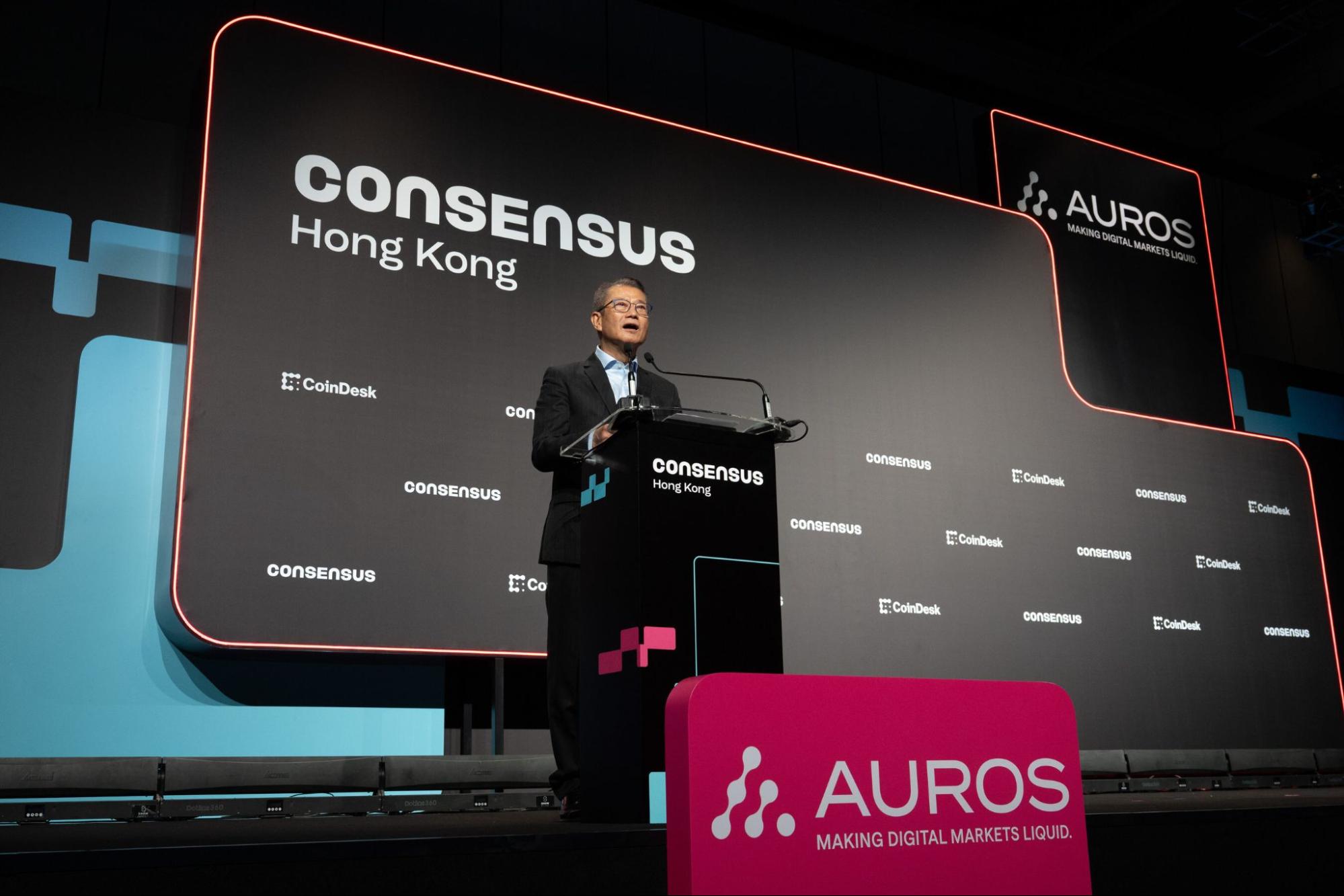
Consensus by CoinDesk closed its second Consensus Hong Kong conference on February 12, drawing 11,000 registered attendees from more than 122 countries and regions. Held at the Hong Kong Convention and Exhibition Centre, the event positioned itself not just as a crypto gathering, but as a broader forum on finance, regulation, and emerging digital infrastructure. Organizers estimated the conference generated close to HK$300 million in local economic impact, underlining how global tech events are becoming economic instruments as much as industry convenings.
The presence of Hong Kong’s senior leadership made the message explicit. Chief Executive John KC Lee used his opening remarks to reinforce the government’s intention to build the city into a digital asset hub, emphasizing the role of regulation in shaping “steady and sustainable” growth. Financial Secretary Paul Chan Mo-po echoed that stance, pointing to the accelerating overlap of AI and blockchain and the need for regulators to support real-world use cases while monitoring risk. The tone signaled a shift: digital assets are increasingly being discussed not as fringe speculation, but as something governments want to domesticate and manage.
That institutional framing was reflected in the attendee mix. Consensus reported a near-even split between Asia-based participants and those from the rest of the world, with major delegations coming from Hong Kong, the U.S., China, India, the UAE, Singapore, the UK, and South Korea. Notably, 62% of attendees were categorized as senior leadership, suggesting the industry is now more boardroom-oriented than developer-underground. The conference featured more than 350 speakers, including figures from Solana, Binance, TRON, SkyBridge Capital, McKinsey Greater China, and Input Output.
Programming leaned heavily into themes that signal maturation, including stablecoins, institutional adoption, and what the event described as “Internet Capital Markets.” There was also an emphasis on the so-called “Machine Economy,” tying AI agents, robotics, and blockchain execution into a single narrative of automated commerce. The inclusion of developer events—such as the EasyA Consensus Hackathon and CoinDesk PitchFest—offered a reminder that much of the industry’s future still depends on whether usable products can emerge from its technical ambitions.
Outside the conference halls, Consensus expanded into a city-wide festival format, with more than 400 side events and large-scale social programming. The event’s next stop, Consensus Miami in May 2026, suggests CoinDesk is trying to sustain momentum by positioning Consensus as a recurring checkpoint where crypto’s evolving identity is negotiated in public.