With its new Coco 2 fleet, the Los Angeles startup moves beyond sidewalk robots, aiming to expand autonomous deliveries into bike lanes and roads as urban logistics grows more complex.
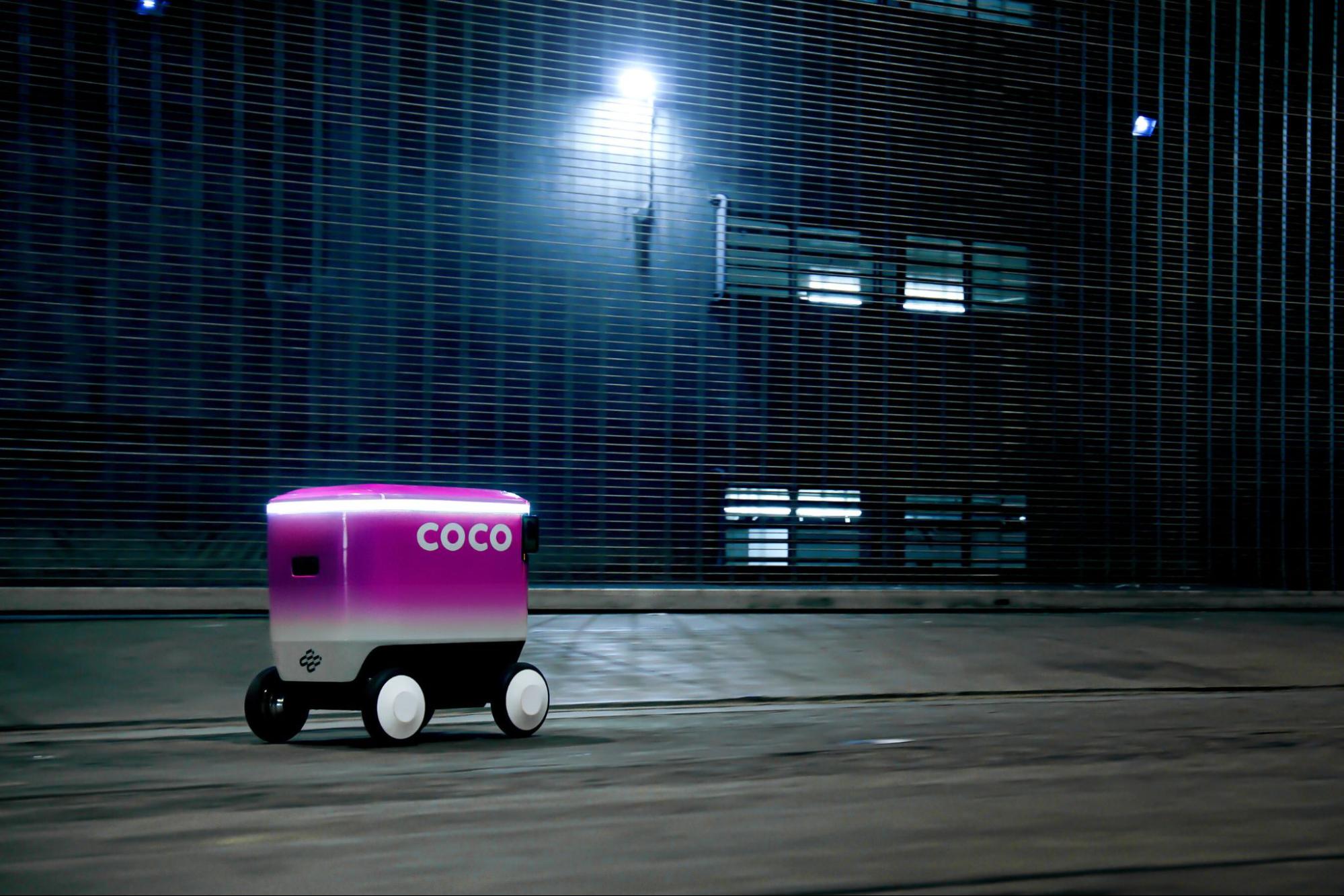
Coco Robotics has introduced Coco 2, its next-generation autonomous delivery robot, marking a shift from earlier human-assisted systems to fully autonomous operation. The Los Angeles–based company says the new fleet is trained on millions of miles of real-world city data, positioning it to navigate sidewalks, bike lanes and, where permitted, roads.
The development reflects broader ambitions in last-mile logistics. While Coco began with short-distance food deliveries on sidewalks, the company now envisions its robots as general-purpose urban couriers serving restaurants, grocers, pharmacies and retailers. Expanding beyond pedestrian pathways could cut delivery times and increase daily capacity, though such moves depend on local regulations and infrastructure.
Coco says its dataset—built from operating in cities with varied conditions, including snow, flooding and dense traffic—forms the backbone of the robots’ learning system. The company also uses simulation tools to train its software on synthetic scenarios before deploying machines into live environments. This combination of real-world miles and digital rehearsal aims to improve safety and adaptability as the fleet scales.
The second-generation robots are designed for longer uptime and greater durability, with onboard computing that processes data locally rather than relying solely on cloud connections. For cities weighing how autonomous systems fit into public spaces, such technical shifts may influence how reliably robots can respond to unpredictable pedestrian and vehicle behavior.
Coco has already partnered with platforms such as Uber Eats, DoorDash and Wolt, and reports more than half a million deliveries to date. Its next step is geographic expansion, with plans to deploy thousands of robots globally by year’s end.
Autonomous delivery remains a test case for how robotics integrates into everyday urban life. Companies like Coco are betting that incremental improvements in hardware, data and AI will make small delivery robots a familiar sight—if cities and consumers are willing to share sidewalks and streets with them.