CJ Foods is using Korea House at the Milano Cortina Winter Olympics to introduce bibigo’s newest European noodle launches and test how far Korean food has moved from trend to mainstream.
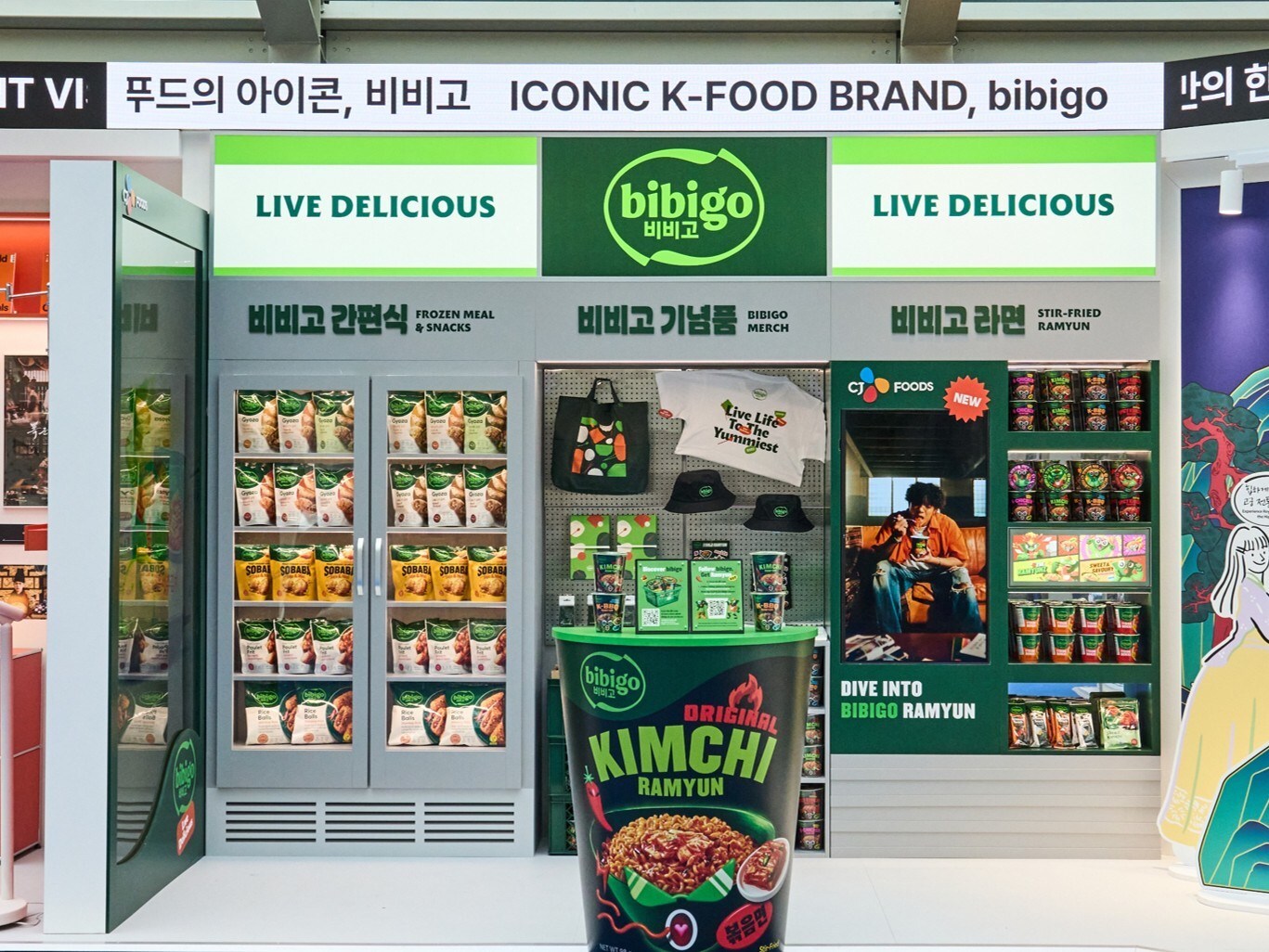
CJ Foods is using the Milano Cortina 2026 Winter Olympics as a high-visibility stage for its global Korean food brand, bibigo, setting up a “bibigo Zone” pop-up inside Korea House in Milan. Located at the historic Villa Necchi Campiglio and operating from February 5 to 22, the space is designed to immerse visitors in Korean culture, with food positioned as a central attraction. For CJ, the choice of venue signals how major international sporting events have become not just cultural showcases, but commercial proving grounds.
Rather than building a traditional product display, bibigo’s booth is modeled after Seoul-style convenience stores, a detail that reflects how Korean food is increasingly marketed as everyday lifestyle rather than novelty. Visitors who follow bibigo’s official Instagram account can receive bibigo Ramyun in K-BBQ and Kimchi flavors, two products newly launched in European markets. The social-media requirement highlights how modern global food expansion is often fueled by digital community-building as much as by distribution deals.
The booth also features bibigo’s broader lineup—mandu dumplings, chicken, seaweed, tteokbokki, and kimchi—aimed not only at consumers but also at retail buyers. That dual purpose matters: events like the Olympics attract everyday visitors, but they also gather decision-makers who shape what appears in supermarket freezers and specialty aisles. In that sense, the pop-up becomes a live test market for whether K-Food can translate from cultural moment to reliable shelf presence.
CJ Foods has leaned into this strategy before. The company notes that bibigo participated in Korea House during the 2024 Paris Summer Olympics, where its pop-up reportedly sold out 500 prepared meals daily within about four hours. The repeat appearance suggests CJ views these temporary activations as more than branding exercises—they are a way to measure demand, refine product positioning, and create momentum for expansion.
Europe, in particular, has become a strategic focus. CJ entered the region through its acquisition of German frozen food company Mainfrost in 2018, later adding subsidiaries in the UK, France, and Hungary. Bibigo products are now sold in 27 European countries, and CJ’s European food business surpassed KRW 100 billion in annual sales for the first time in 2024, with sales up 25% year-over-year in the first three quarters of 2025.
To keep up, CJ is building a factory near Budapest expected to be completed by the end of this year, producing dumplings and chicken for the European market. It’s a practical next step that reflects a broader shift: Korean food is no longer just being exported—it is being built into local supply chains.