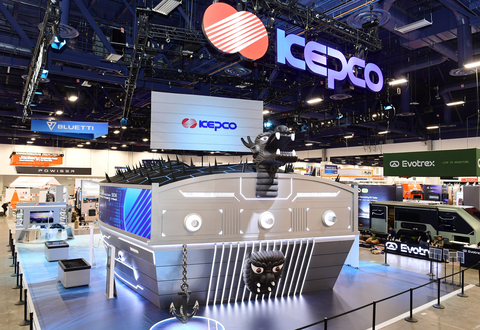
KEPCO’s expansive CES presence blends national symbolism and advanced power systems, reflecting how traditional utilities are repositioning themselves as technology exporters in a climate- and security-constrained world.
Korea Electric Power Corporation, known as KEPCO, arrived at CES 2026 with an ambition that extends well beyond product demonstrations. By hosting Korea’s national representative booth, the state-owned utility signaled that electricity providers are no longer quiet infrastructure operators but active players in global technology markets. The move reflects rising pressure on utilities to innovate as energy systems become more complex, decentralized, and politically significant.
At the center of KEPCO’s exhibition are nine proprietary technologies spanning the entire power value chain, from generation to consumption. This breadth matters because it mirrors how energy challenges now cut across silos, requiring integrated solutions rather than isolated upgrades. By presenting generation, grid management, diagnostics, and end-use technologies together, KEPCO positions itself as a systems builder rather than a single-function utility.
The exhibition’s design leans heavily on storytelling, guiding visitors through immersive videos, interactive kiosks, and layered digital content. This approach suggests an awareness that technical sophistication alone no longer captures attention in global markets. Instead, KEPCO frames electricity as a response to shared problems such as climate risk and energy security, translating complex engineering into narratives accessible to policymakers, investors, and the public.
Symbolism plays an unusually prominent role. Drawing inspiration from Korea’s historic Turtle Warship, KEPCO reimagines national heritage as a metaphor for resilience through innovation. The collaboration with the National Museum of Korea reinforces this message, blending cultural identity with future power technologies and underscoring that KEPCO sees itself not just as a company, but as a national representative on a global stage.
Taken together, KEPCO’s CES strategy reflects a broader shift underway in the energy sector. Utilities facing domestic saturation and global competition are increasingly looking outward, exporting technology, expertise, and systems thinking. The exhibition does not resolve the technical or political challenges ahead, but it illustrates how even traditional state-run power companies are redefining their role in a world where energy, technology, and national strategy are tightly intertwined.