A limited-edition ProArt GoPro Edition blends high-end AI processing with tools tailored to action-camera workflows, reflecting how hardware makers are courting content creators.
ASUS has introduced the ProArt GoPro Edition (PX13), a limited-edition convertible laptop developed in collaboration with GoPro and now available in the United States. The release signals how computer manufacturers are increasingly designing hardware around the specific workflows of digital creators rather than treating creative software as an afterthought.
At its core, the device is powered by AMD’s Ryzen AI Max+ 395 processor, featuring a neural processing unit capable of handling AI-assisted tasks locally. With up to 128GB of memory and integrated graphics, the laptop is built to manage demanding workloads such as high-resolution action footage editing, generative video tools and real-time enhancements. Local AI processing, ASUS emphasizes, reduces reliance on cloud services and aims to maintain performance consistency during mobile production.
The collaboration goes beyond raw specifications. The laptop integrates GoPro-focused features, including a dedicated hotkey to launch GoPro Player and built-in support for GoPro Cloud and 360-degree video within ASUS’s StoryCube app. The software automatically organizes and tags footage, addressing a common friction point for creators who juggle multiple shoots and large volumes of media.
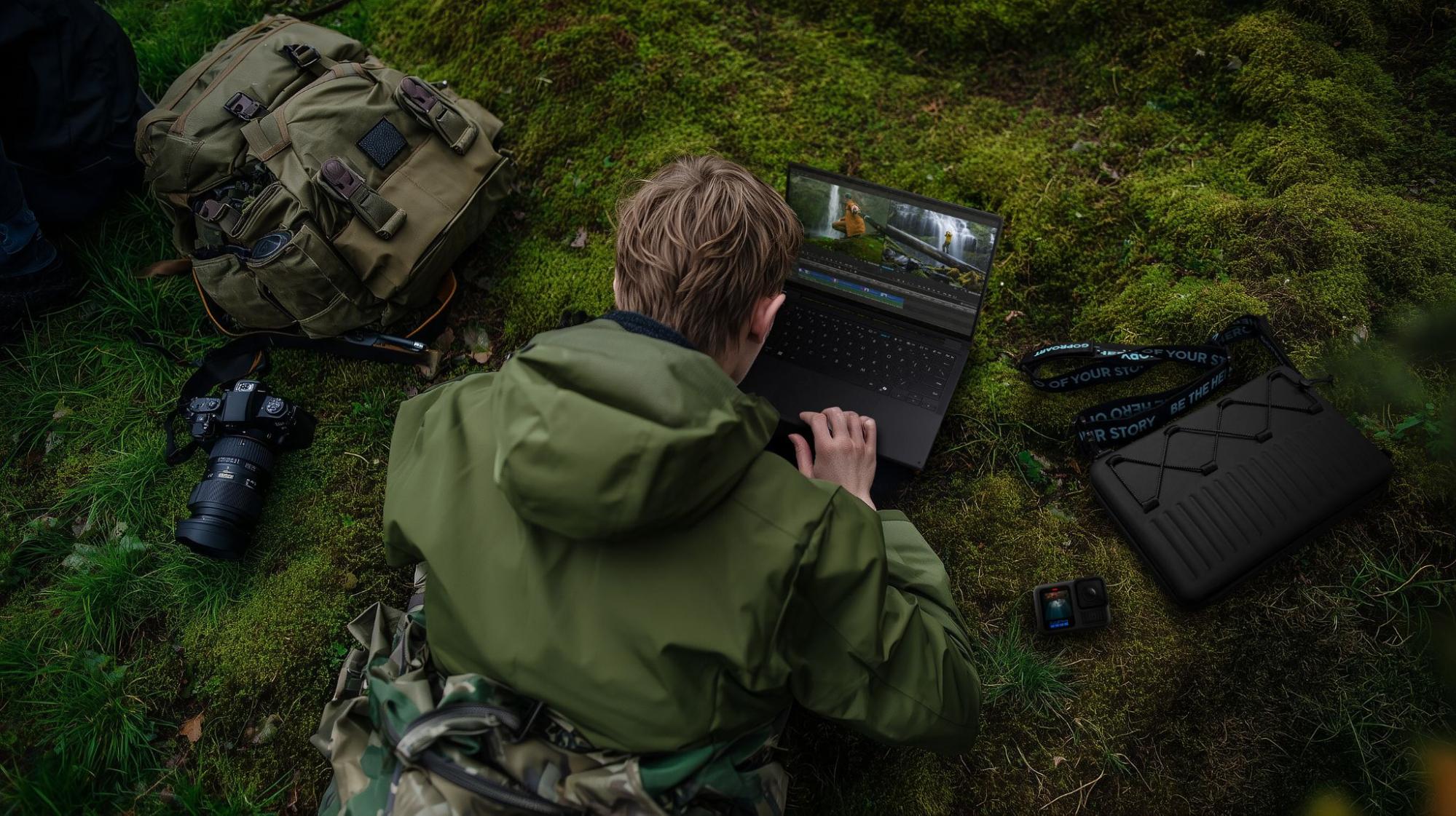
Physically, the 13-inch convertible device adopts a rugged aesthetic inspired by GoPro’s branding, with a reinforced hinge and military-grade testing for durability. Its 3K OLED touchscreen supports stylus input and ASUS’s DialPad controls, offering tactile precision for tasks such as color grading and timeline adjustments. The form factor allows it to function as a traditional laptop, a tablet or a tent-style display monitor in the field.
Priced at $2,999.99, the ProArt GoPro Edition sits firmly in the premium category. Yet its launch illustrates a broader shift in the computing market: as content creation becomes both more professionalized and more mobile, hardware companies are seeking to embed creative ecosystems directly into their devices. Rather than competing solely on speed or storage, ASUS is positioning this collaboration as an integrated toolset for creators who want to move seamlessly from capture to edit.