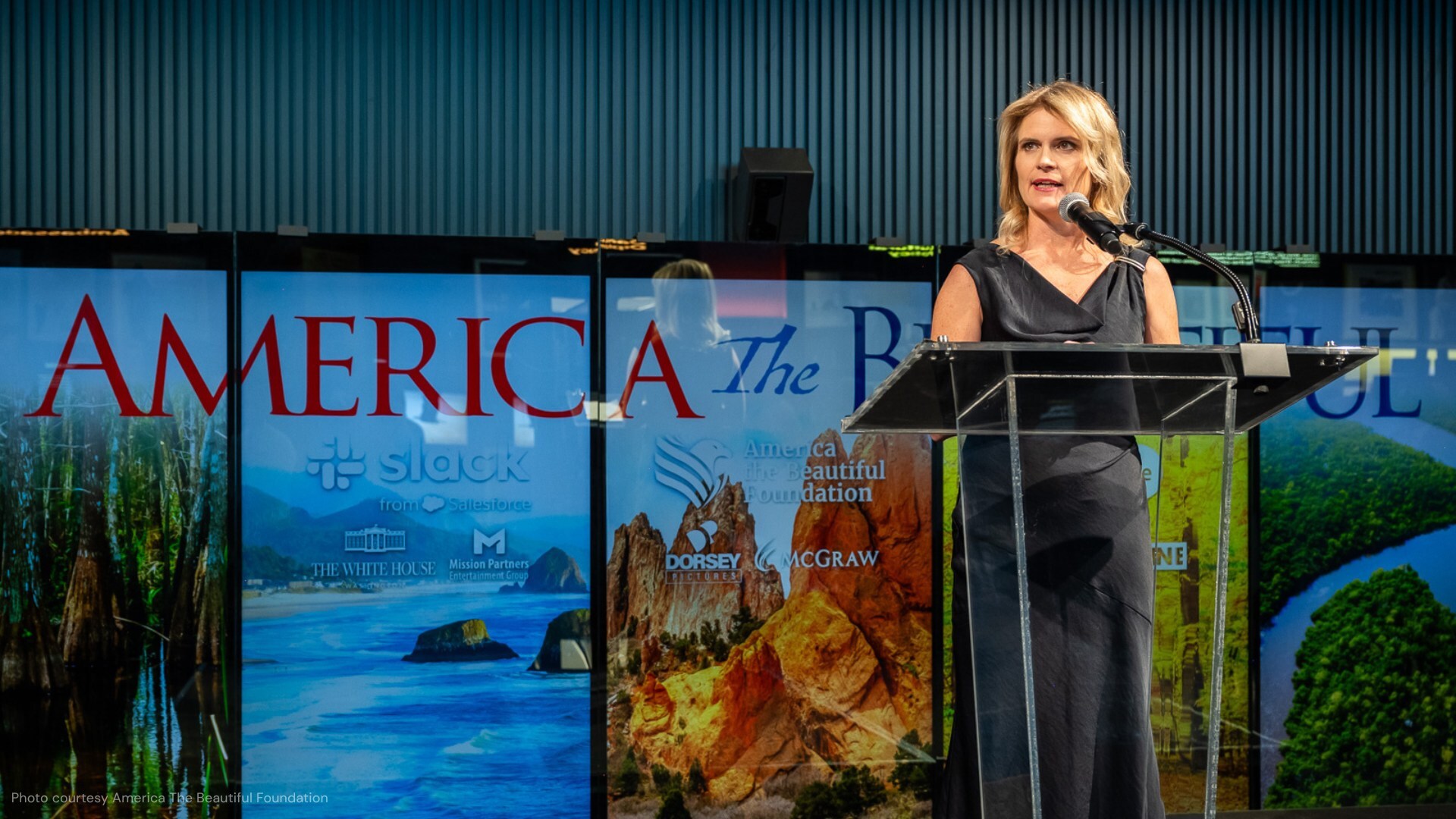
As the United States approaches its 250th anniversary, a new initiative from the America The Beautiful Foundation signals a broader effort to connect environmental restoration with cultural storytelling and public engagement.
America The Beautiful Foundation has introduced a nationwide campaign that combines conservation projects, educational programs, and a large-scale IMAX film series aimed at highlighting the country’s landscapes and environmental challenges. The initiative brings together partners across government, industry, and nonprofit sectors in what the organization describes as a coordinated push to restore land, protect water resources, and strengthen community resilience.
At the center of the campaign is a storytelling strategy built around a national IMAX film series, designed to reach audiences through cinematic experiences while reinforcing the importance of natural and working landscapes. By pairing visual storytelling with policy and on-the-ground initiatives, the Foundation is attempting to bridge awareness and action in a way that traditional campaigns often struggle to achieve.
The effort also includes an education component that integrates environmental themes into school curricula and hands-on learning programs. Early initiatives will introduce garden-based learning in schools across all 50 states, reflecting a focus on engaging younger generations in sustainability through practical, localized experiences.
On the conservation side, the campaign outlines ambitious goals, including large-scale reforestation and expanded wildfire resilience efforts. Collaborations with environmental organizations and public agencies aim to address issues such as forest degradation, access to public lands, and the increasing frequency of climate-related disruptions.
The inclusion of clean water initiatives further broadens the scope, targeting ecosystem restoration and pollution challenges in both coastal and inland regions. These efforts highlight how environmental concerns are increasingly interconnected, requiring coordinated responses that span multiple sectors and geographies.
Taken together, the campaign reflects a shift toward more integrated approaches to conservation, where communication, education, and infrastructure are developed in parallel. Rather than treating environmental protection as a standalone issue, the initiative positions it as a shared national project tied to economic stability, public health, and cultural identity.
As the anniversary milestone approaches, the America The Beautiful Foundation’s campaign illustrates how large-scale environmental efforts are evolving. Success may depend not only on policy and funding, but on the ability to engage the public in ways that make conservation both visible and participatory.