
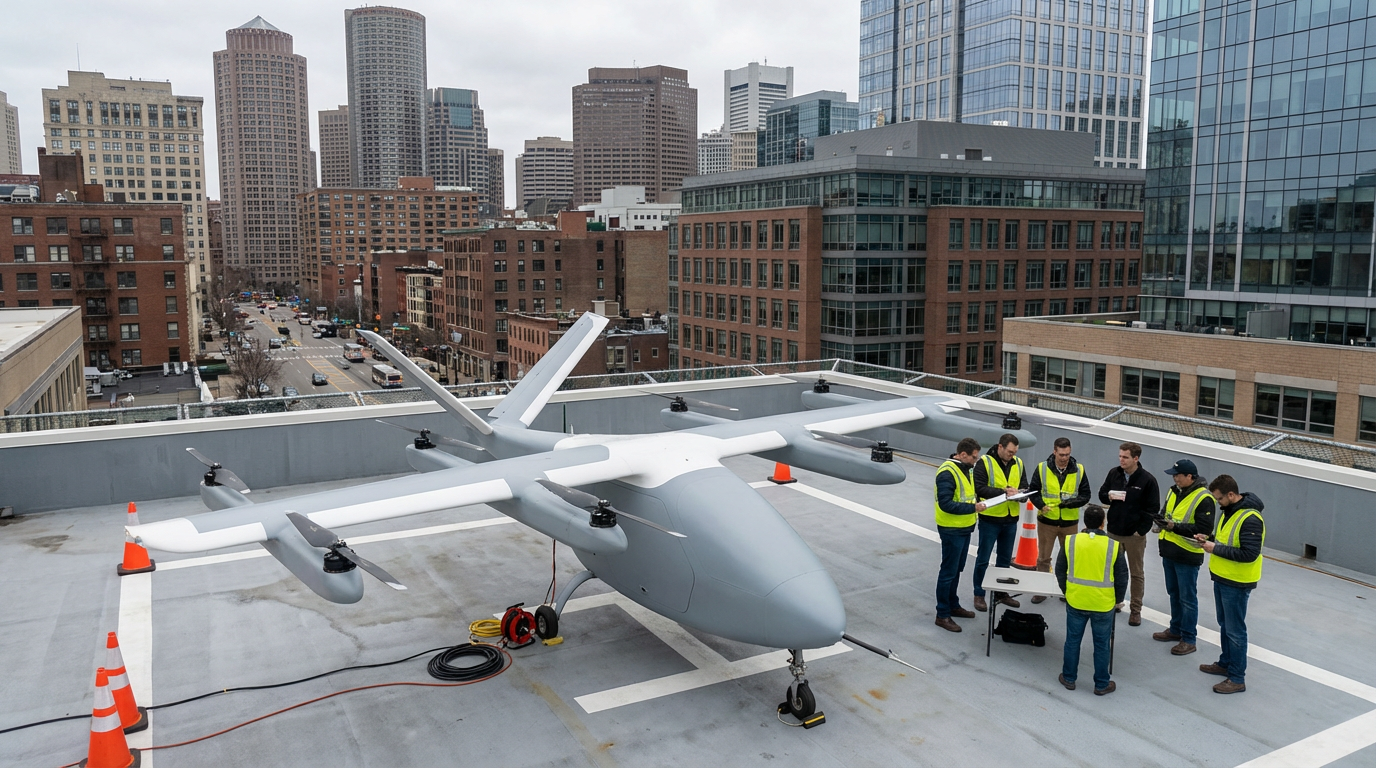
A federal pilot program and national strategy are pushing electric air taxis from concept to coordinated trials, raising practical questions about safety, infrastructure, and how cities adapt to flight above their streets.
Archer Aviation’s move to pursue air taxi trials in multiple U.S. cities signals that advanced air mobility is entering a more consequential phase. By submitting applications under the White House’s eVTOL Integration Pilot Program, Archer is no longer focused solely on aircraft development but on whether urban environments, regulators, and operators can align around real-world use. The timing matters, as the company’s efforts coincide with the Department of Transportation’s release of a national strategy designed to move air taxis from testing to early operations.
The eVTOL Integration Pilot Program represents a notable shift in federal posture. Rather than waiting for a fully mature market, the DOT and FAA are inviting cities, manufacturers, and public agencies to work together on early deployments, with safety oversight built into the process. This approach acknowledges that electric air taxis raise challenges—airspace coordination, emergency response, and local acceptance—that cannot be solved in isolation by manufacturers or regulators alone.
Archer’s applications span cities in California, Texas, Florida, Georgia, and New York, reflecting an understanding that geography and use cases will vary widely. Urban density, weather patterns, and existing transportation networks will all shape how, or if, air taxis make sense in specific locations. The exclusive partnership with Huntington Beach, tied to preparations for the 2028 Los Angeles Olympics, highlights how high-profile events can serve as catalysts for testing new transportation modes under public scrutiny.
The broader significance lies in the DOT’s Advanced Air Mobility National Strategy, which attempts to coordinate certification, infrastructure, and operations into a single roadmap. By outlining recommendations and timelines, the strategy seeks to reduce uncertainty for cities and companies while maintaining federal control over safety standards. It also frames air taxis not as novelty aircraft, but as part of a domestic manufacturing and jobs agenda tied to U.S. leadership in aviation.
Still, the path forward is far from assured. The FAA has yet to approve any applications, and early operations are expected to be limited and closely monitored. Archer’s announcements suggest momentum, but they also underscore how dependent the sector is on regulatory pacing, public acceptance, and proof that electric air taxis can integrate smoothly into already crowded skies. What comes next will test whether this vision of urban flight can move beyond policy documents into everyday transportation reality.