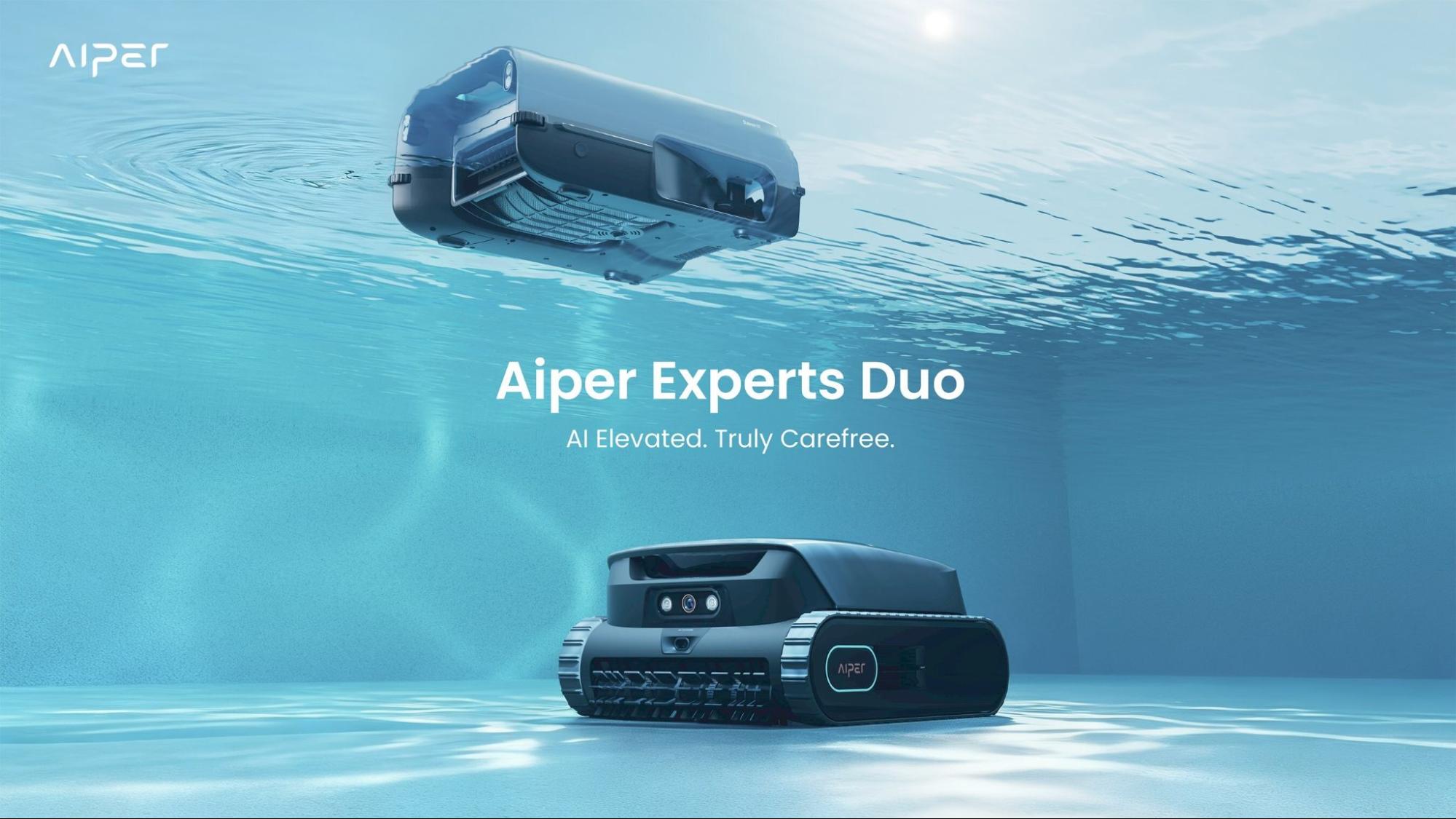
With a solar-powered skimmer and an AI-guided underwater cleaner, Aiper introduces a two-device approach aimed at making residential pool maintenance more automated and energy-conscious.
Aiper has unveiled what it calls the Experts Duo, a two-robot system designed to automate pool cleaning around the clock. The Atlanta-based company, known for smart robotic pool cleaners, is pairing its Scuba V3 underwater cleaner with the solar-powered EcoSurfer S2 skimmer in an effort to divide the work between surface and submerged maintenance.
Residential pool ownership often comes with a steady routine of skimming, vacuuming and chemical balancing, tasks that can quickly erode the leisure they are meant to support. By separating top and bottom cleaning into two coordinated devices, Aiper is betting that specialization can improve both coverage and durability. The Scuba V3 handles floors, walls and waterlines, while the EcoSurfer S2 focuses on leaves, insects and debris before they sink.
The underwater unit uses what Aiper describes as cognitive AI to map pool size, shape and cleaning history, adjusting its routes accordingly. Meanwhile, the skimmer relies on solar charging and a “sun-seeking” function to maintain surface cleaning throughout the day. The inclusion of a chlorine tablet chamber in the skimmer hints at a broader ambition: integrating water care functions into a single, semi-autonomous ecosystem.
The concept reflects a larger trend in home technology, where robotics and artificial intelligence are moving from novelty to routine infrastructure. Robotic vacuums have become common indoors; pool robots represent a parallel evolution outdoors, especially as consumers show interest in energy-efficient and low-maintenance solutions.
Priced at a premium compared with single-device cleaners, the Experts Duo suggests that convenience remains a strong selling point in the home-improvement market. Whether homeowners embrace a fully automated approach to pool care may depend not only on technology, but also on trust—confidence that two machines working in tandem can deliver the kind of reliability once associated with manual oversight.