b.well Connected Health introduces bailey™, a white-label AI tool designed to embed directly into healthcare apps, reflecting a broader push to turn fragmented medical data into actionable guidance.
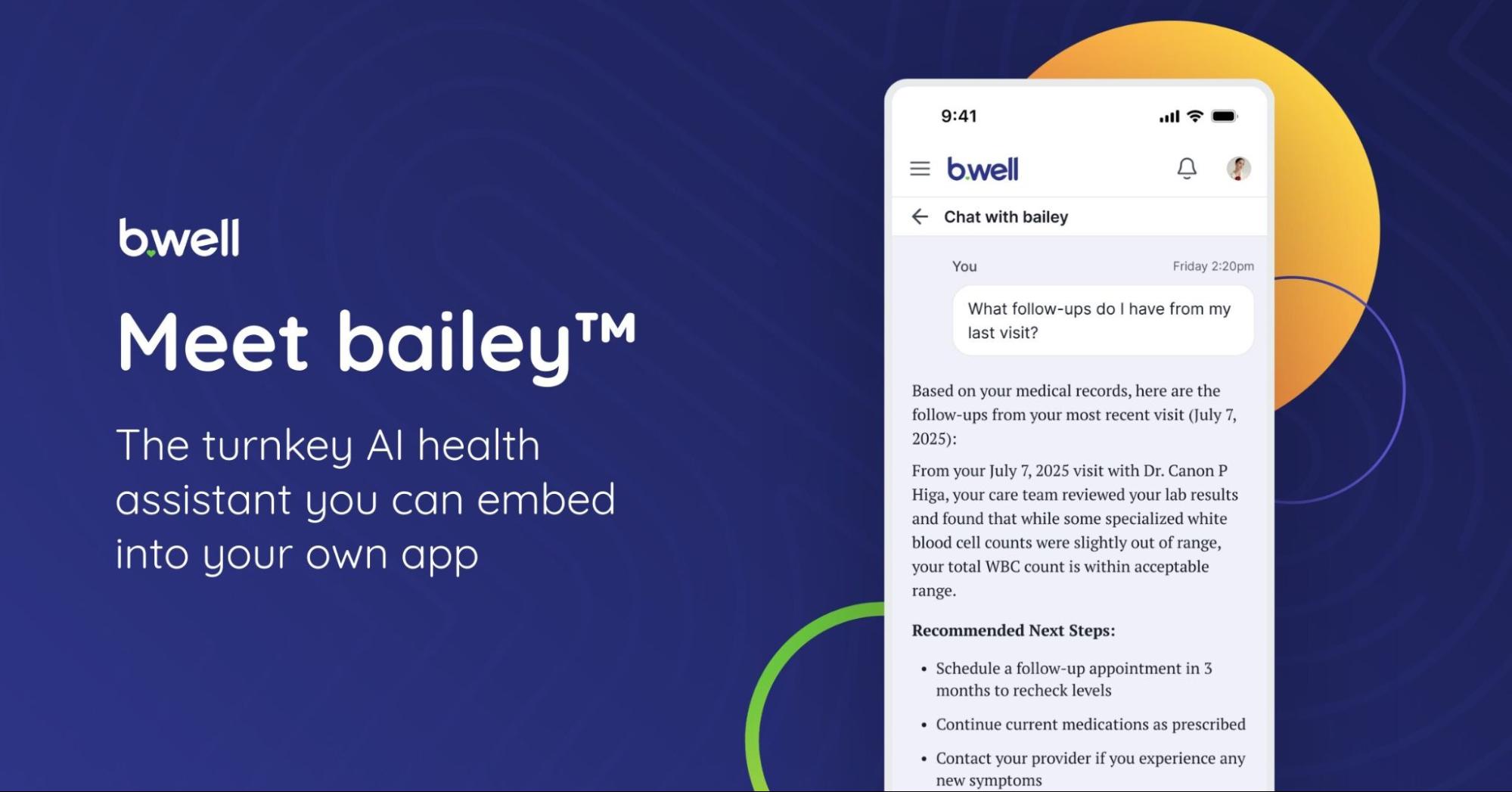
b.well Connected Health has unveiled bailey™, a white-label artificial intelligence assistant intended for healthcare organizations that want to integrate AI into their own digital platforms. Rather than building a proprietary assistant from scratch, insurers, health systems and digital health companies can embed bailey into their existing apps, where it is designed to interpret medical data and guide users through tasks such as scheduling appointments or managing medications.
The announcement arrives amid an industry-wide rush to deploy AI tools that promise to improve engagement while reducing administrative strain. Yet healthcare presents challenges that differ sharply from other sectors: patient data is fragmented across providers, subject to strict privacy regulations, and often stored in incompatible formats. Building an AI system capable of navigating that complexity typically requires significant time, technical resources and compliance oversight.
b.well positions bailey as a shortcut through those hurdles, built on its broader data platform that aggregates and structures clinical, claims, pharmacy and wearable information into what it describes as a longitudinal health record. By normalizing data from hundreds of sources, the system aims to give the AI assistant enough context to move beyond generic answers and support specific actions within a patient’s care journey.
The concept reflects a shift in how AI is being framed in healthcare. Early digital assistants often functioned as informational chatbots, answering general questions about symptoms or coverage. Increasingly, the emphasis is on “action-oriented” systems that can interpret personal data and complete tasks, such as coordinating follow-up care or navigating benefits, within a single interaction.
Whether tools like bailey meaningfully reduce fragmentation will depend on adoption and trust, both among institutions and consumers. Still, the launch underscores a broader trend: as AI becomes embedded in everyday applications, healthcare organizations are seeking ways to harness its capabilities without rebuilding their technology stacks from the ground up.