
New England Tech’s planned Innovation Center reflects growing urgency around skilled labor shortages and a broader rethinking of higher education’s role in preparing students for practical, well-paid work.
New England Institute of Technology is planning a $40 million Innovation Center for Building Sciences, a move that highlights how central skilled trades have become to the region’s economic future. The new facility is intended to respond to a persistent imbalance between demand for trained workers and the supply of graduates in construction, electrical, plumbing, and related fields. At a time when infrastructure needs are growing, the announcement points to education as a bottleneck worth serious investment.
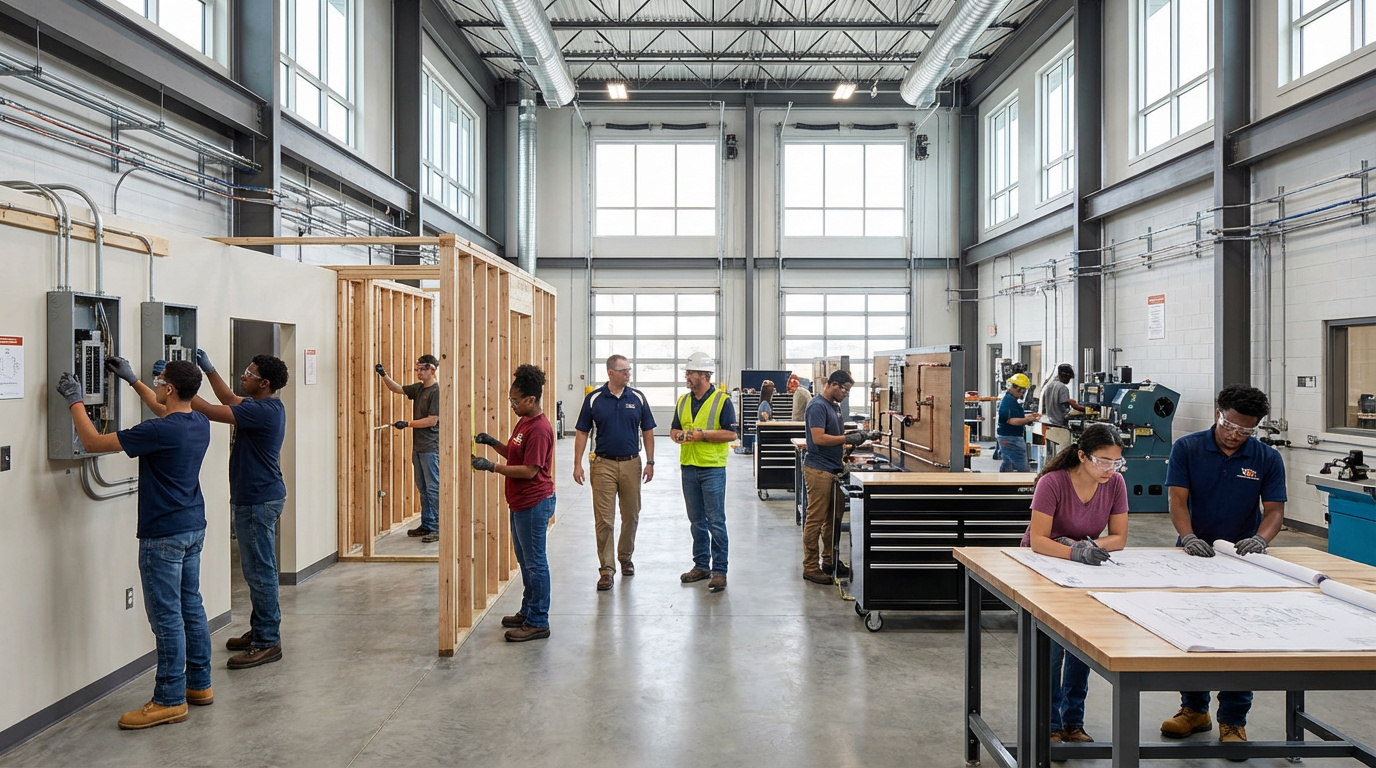
The scale of the project—a 53,000-square-foot building on NEIT’s East Greenwich campus—underscores how hands-on training remains difficult to scale without physical space. Unlike many academic expansions focused on classrooms or housing, this center is designed to replicate real job sites with modern labs and industry-grade equipment. That emphasis reflects a pragmatic understanding: skilled trades are learned through doing, not through lecture alone.
The timing also matters. Across the U.S., retirements and declining enrollment in trade programs have strained the workforce just as construction, maintenance, and modernization demands increase. By expanding capacity to serve roughly 1,000 students annually, NEIT is positioning itself as a pipeline for employers who increasingly struggle to find qualified talent. The approach suggests that addressing labor shortages may require institutions to grow faster than traditional academic timelines allow.
Programs housed in the new center will span multiple levels, from associate to master’s degrees, blending vocational training with formal credentials. This structure challenges the lingering notion that trades education sits outside higher education, instead framing it as a continuum with long-term career progression. For students, that model offers flexibility and earning potential without requiring a detour into unrelated coursework.
Equally notable is how the project will be funded. With no state dollars involved, the center relies on institutional resources and philanthropy, reflecting both confidence and pressure on private institutions to solve public workforce problems. In that sense, the Innovation Center is not just a building but a statement about responsibility—placing skilled trades education at the center of economic development rather than on its margins.