At Genesis House in New York, three finalists presented collections shaped by cultural storytelling and modern form, reflecting how fashion programs are increasingly investing in identity-driven design.
Genesis Motor North America is expanding its presence in the fashion world through its CFDA | Genesis House AAPI Design + Innovation Grant, a program that blends funding, mentorship, and cultural immersion to support emerging designers. Over the past five months, finalists developed collections rooted in personal heritage, with Genesis providing each designer $40,000 along with access to advisors across fashion, business, and technology.
The structure of the program reflects a broader shift in how creative industries define “innovation.” Rather than treating heritage as something to move beyond, the grant positions cultural history as a living source of experimentation and new design language. Finalists also traveled to Seoul, South Korea, for an immersive experience intended to deepen their understanding of Korean culture, reinforcing Genesis House’s role as both a brand space and a cultural platform.
The 2026 grant recipient, Terrence Zhou, presented a three-piece collection that explored innovation as a form of incubation, where transformation happens through refinement rather than disruption. Drawing on the Chinese creation myth of Pan Gu, Zhou used the idea of a cosmic egg as a metaphor for protection and emergence, building translucent sculptural forms around garments with softened, partially concealed details. References ranged from the Korean moon jar to a monumental lily and an aerodynamic automotive prototype, tracing a visual narrative from origin to forward motion.
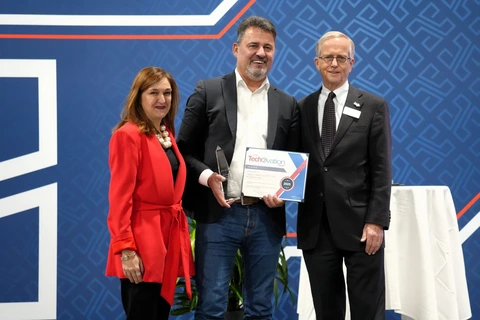
Zhou received an additional $60,000 to further develop his business, bringing his total grant funding to $100,000. The completed collections were shown at Genesis House, where guests heard directly from finalists about the cultural narratives behind their work. The collections will remain on display at Genesis House through February 22.
Programs like this increasingly function as both creative incubators and signals of where the fashion industry is headed. Rather than rewarding only commercial readiness, grants tied to institutions like the CFDA are elevating designers who treat identity, craftsmanship, and cultural memory as central design tools. In the lead-up to New York Fashion Week, the event positioned these collections not as side projects, but as part of the conversation shaping the future of American fashion.