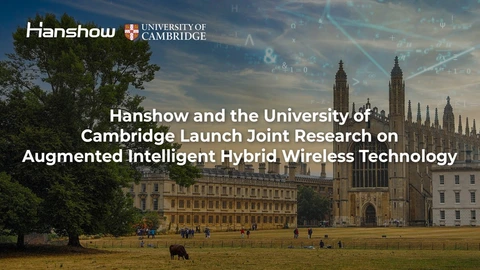
The partnership points to a deeper convergence of academic wireless research and real-world retail systems, as stores evolve from connected spaces into complex, energy-aware digital environments.
Hanshow’s decision to enter a multi-year research collaboration with the University of Cambridge reflects a broader rethinking of how retail technology is developed and validated. Rather than focusing solely on incremental product upgrades, Hanshow is aligning itself with foundational research in hybrid wireless systems, an area increasingly central to how physical stores operate at scale. The move suggests that the next phase of retail digitization will be driven as much by infrastructure intelligence as by visible customer-facing tools.
At the heart of the collaboration is a shared interest in intelligent hybrid wireless technologies that can integrate multiple communication protocols efficiently. Retail environments are dense, noisy, and energy-constrained, and the limits of existing wireless approaches are becoming more apparent as stores add sensors, displays, and automation. By combining Cambridge’s expertise in wireless theory with Hanshow’s deployment experience, the partnership aims to bridge a persistent gap between laboratory research and operational reliability.
Hanshow’s background in low-power communication, particularly through its proprietary protocols and involvement in Bluetooth standards, gives the collaboration practical grounding. Electronic shelf labels may appear simple, but at scale they demand resilient networking, precise timing, and minimal energy use, especially in high-density settings. Research into ambient and energy-harvesting IoT points toward systems that can operate longer, cost less to maintain, and reduce the environmental footprint of digital infrastructure.
The collaboration also matters because it looks beyond retail alone. While stores are the immediate testbed, the same wireless challenges apply to logistics hubs, offices, and other sensor-rich spaces. If successful, the research could inform how future smart environments balance responsiveness, sustainability, and interoperability without relying on constant battery replacement or centralized control.
More broadly, the Hanshow–Cambridge partnership illustrates a shift in how industrial technology companies approach innovation. Instead of treating academic research as distant or abstract, the collaboration positions it as a core input to product strategy and long-term competitiveness. In a sector where digital transformation is often defined by speed, this initiative highlights the quieter importance of durable, well-founded systems that can support intelligent environments for years rather than product cycles.