The startup’s recognition highlights a growing concern in cybersecurity: how to monitor and manage autonomous AI agents as businesses adopt more complex, self-directed systems.
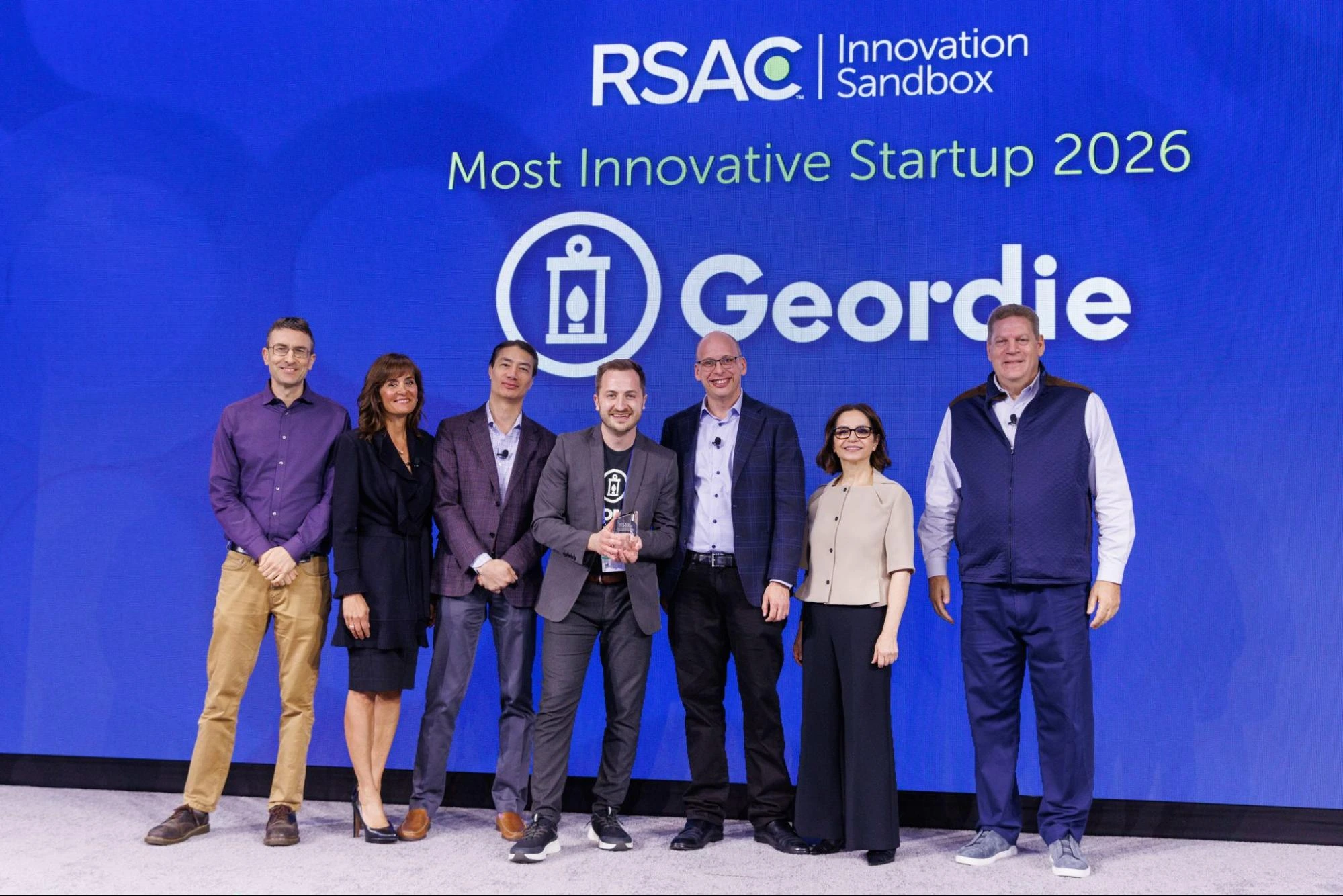
Geordie AI was named “Most Innovative Startup” at the RSAC 2026 Innovation Sandbox, a competition widely regarded as a launching ground for cybersecurity companies. The recognition places the company among a lineage of past finalists that have gone on to major acquisitions or industry prominence, underscoring the event’s influence in shaping the sector.
At the center of Geordie AI’s pitch is a platform designed to monitor and govern AI agents—software systems capable of acting independently within enterprise environments. As organizations increasingly deploy these systems to automate workflows and decision-making, the need to understand their behavior and associated risks has become a pressing concern.
The company’s focus reflects a broader shift within cybersecurity, where attention is moving beyond traditional infrastructure to include emerging forms of automation. AI agents introduce new challenges, particularly because their actions can evolve dynamically, making it harder to track intent, accountability, and potential vulnerabilities in real time.
The RSAC Innovation Sandbox itself has long served as a barometer for where the industry is headed. Over the past two decades, its finalists have collectively attracted tens of billions of dollars in investment and frequently become acquisition targets, suggesting that the technologies highlighted there often align with future market demand.
Recent high-profile acquisitions of past participants further reinforce this pattern, indicating that investors and large technology firms are closely watching early-stage innovation in cybersecurity. In that context, Geordie AI’s win may signal increasing interest in tools that address the governance of AI-driven systems rather than just their performance.
The timing is notable, as enterprises are rapidly integrating AI into core operations, often without fully developed oversight mechanisms. This creates a gap between capability and control, one that security platforms are now attempting to bridge.
Geordie AI’s recognition does not guarantee long-term success, but it does point to a growing consensus: as AI systems become more autonomous, securing them will require new approaches. The challenge is no longer just protecting networks or data, but understanding the behavior of machines that can act on their own.