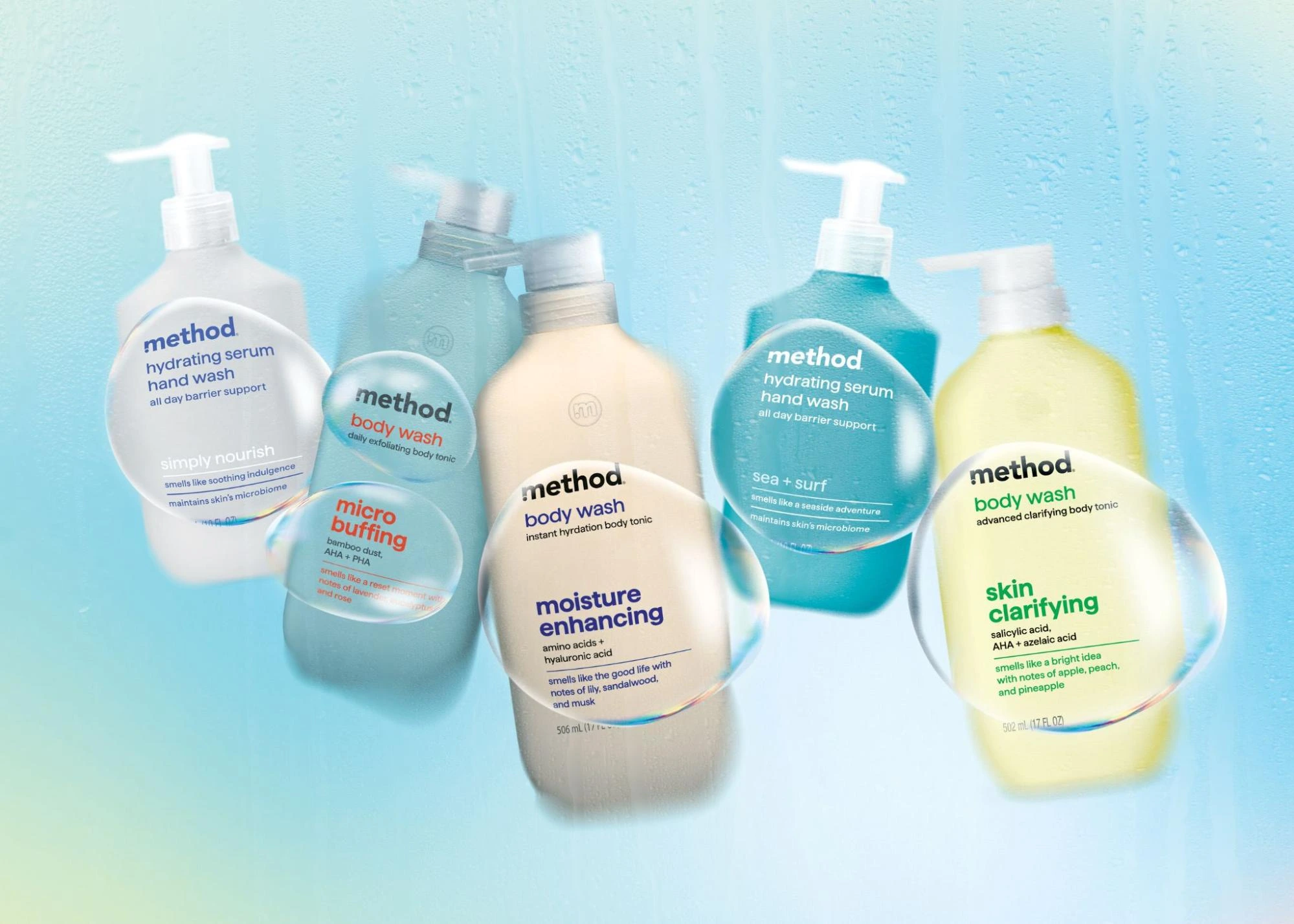
method introduces body wash tonics and serum-style hand washes that reflect a broader shift toward blending skincare benefits with everyday cleansing, as consumers seek more personalized routines.
method is expanding its personal care portfolio with a new line of body wash tonics and hydrating serum hand washes, signaling a move beyond traditional cleansing products. The launch builds on the brand’s earlier entry into skincare-adjacent offerings and reflects growing consumer interest in products that combine hygiene with targeted skin benefits.
The new body wash tonics are formulated with ingredients more commonly associated with skincare, including hyaluronic acid, glycolic acid, and colloidal oatmeal. These additions point to a shift in how body care is positioned, with an emphasis on improving skin texture, moisture, and overall appearance rather than simply cleaning the skin.
This approach aligns with broader consumer behavior trends, where routines are becoming more customized and layered. Survey data cited by the company suggests many people already vary their product use within a single routine, indicating a demand for flexibility and products that address specific, changing needs.
The introduction of serum-based hand washes extends this concept to another frequently used category. By incorporating moisturizing and barrier-supporting ingredients, these products aim to respond to concerns about dryness and skin irritation, particularly in a context where frequent handwashing has become more ingrained in daily life.
Taken together, these launches highlight how the boundary between skincare and basic personal care continues to blur. Products once considered utilitarian are increasingly designed to deliver multiple benefits, combining function with a more holistic view of skin health and wellness.
There is also a design and sustainability dimension to the release, with packaging made largely from recycled plastic and formulations positioned for sensitive skin. While these features are becoming more common across the industry, they reflect rising expectations around both environmental impact and product safety.
method’s expansion suggests that even established categories like body wash and hand soap are being reimagined. As consumers look for products that fit into more personalized and health-conscious routines, brands are responding by adding complexity and functionality to everyday essentials.
In this context, the shift is less about introducing entirely new products and more about redefining what existing ones are expected to do. Cleansing, once a singular purpose, is increasingly part of a broader conversation about care, comfort, and long-term skin health.