At MWC Barcelona 2026, LG Electronics will debut a combined telematics control unit and antenna module, signaling how connectivity is becoming central to the shift from software-defined to AI-defined vehicles.
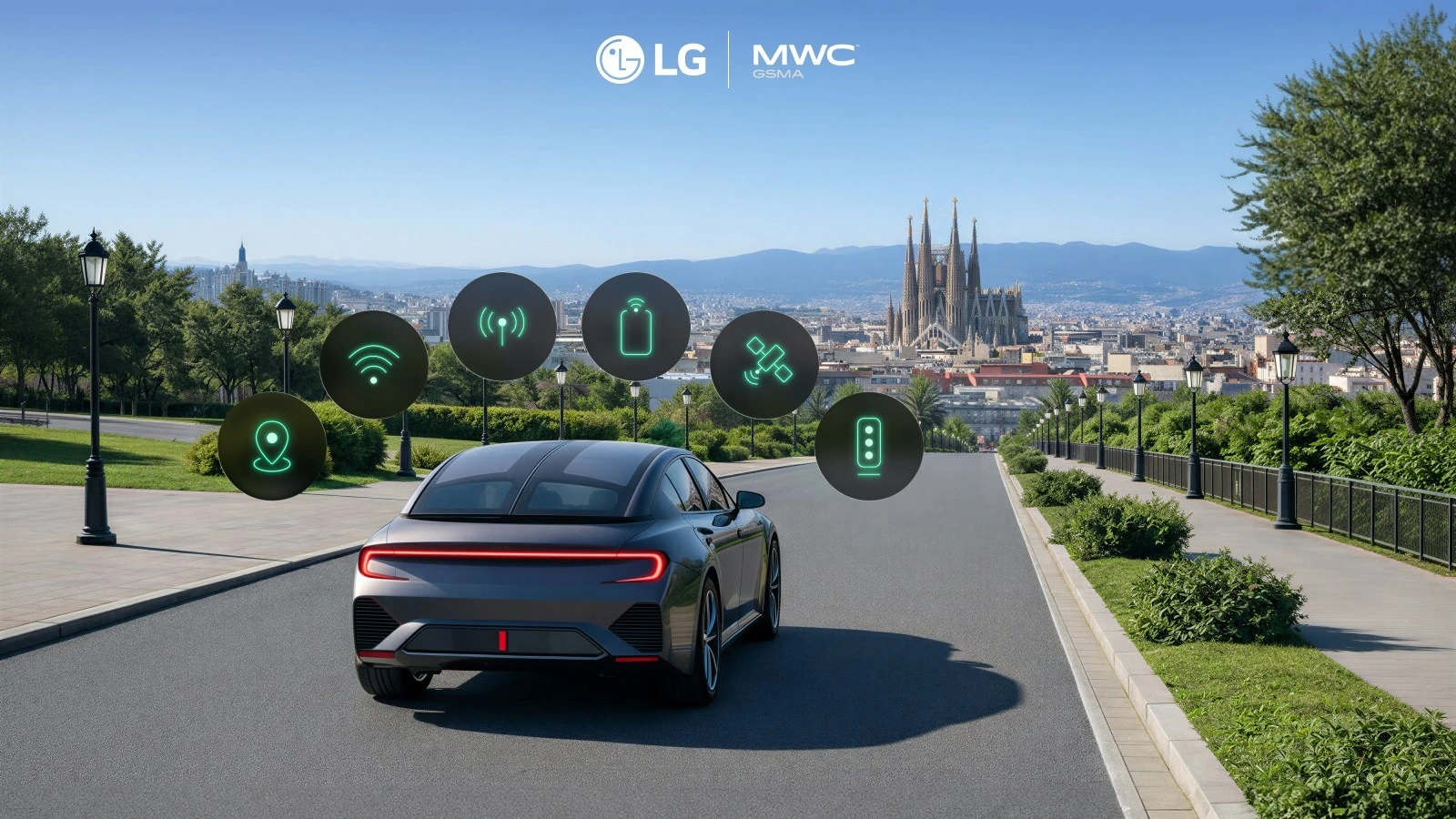
LG Electronics will use its first appearance at Mobile World Congress in Barcelona to introduce a next-generation smart telematics solution aimed at automakers navigating an increasingly connected future. The company’s new module integrates a telematics control unit (TCU) and antenna into a single system, reflecting how in-vehicle communications are moving from peripheral components to core infrastructure.
Telematics systems enable vehicles to communicate with mobile networks, satellites and other vehicles, supporting features from navigation and infotainment to advanced driver assistance. LG’s integrated module is designed to receive multiple external signals, including 5G, GPS, vehicle-to-everything (V2X) and satellite communications, while processing and transmitting data to in-car systems. By consolidating components that were traditionally installed separately, the company aims to reduce signal loss, simplify wiring and improve overall efficiency.
The timing aligns with a broader industry transition from software-defined vehicles to what some now call AI-defined vehicles, where artificial intelligence plays a more active role in managing data and decision-making. As vehicles generate and exchange larger volumes of information, connectivity hardware must support faster, more stable processing while meeting cybersecurity and regulatory standards. LG’s approach suggests that hardware architecture remains as critical as software innovation in this evolution.
According to estimates based on TechInsights data, LG held a 23 percent share of the global telematics market in 2025, positioning it as a leading supplier in the field. At MWC, the company will host a private showcase for automakers and telecommunications partners, underscoring the business-to-business nature of automotive technology development.
The debut illustrates how mobility companies are competing not only on vehicle performance but also on digital capability. As cars become rolling data hubs, integrated connectivity solutions may shape everything from vehicle design—such as eliminating external antennas—to the reliability of autonomous and AI-driven systems that depend on seamless communication.